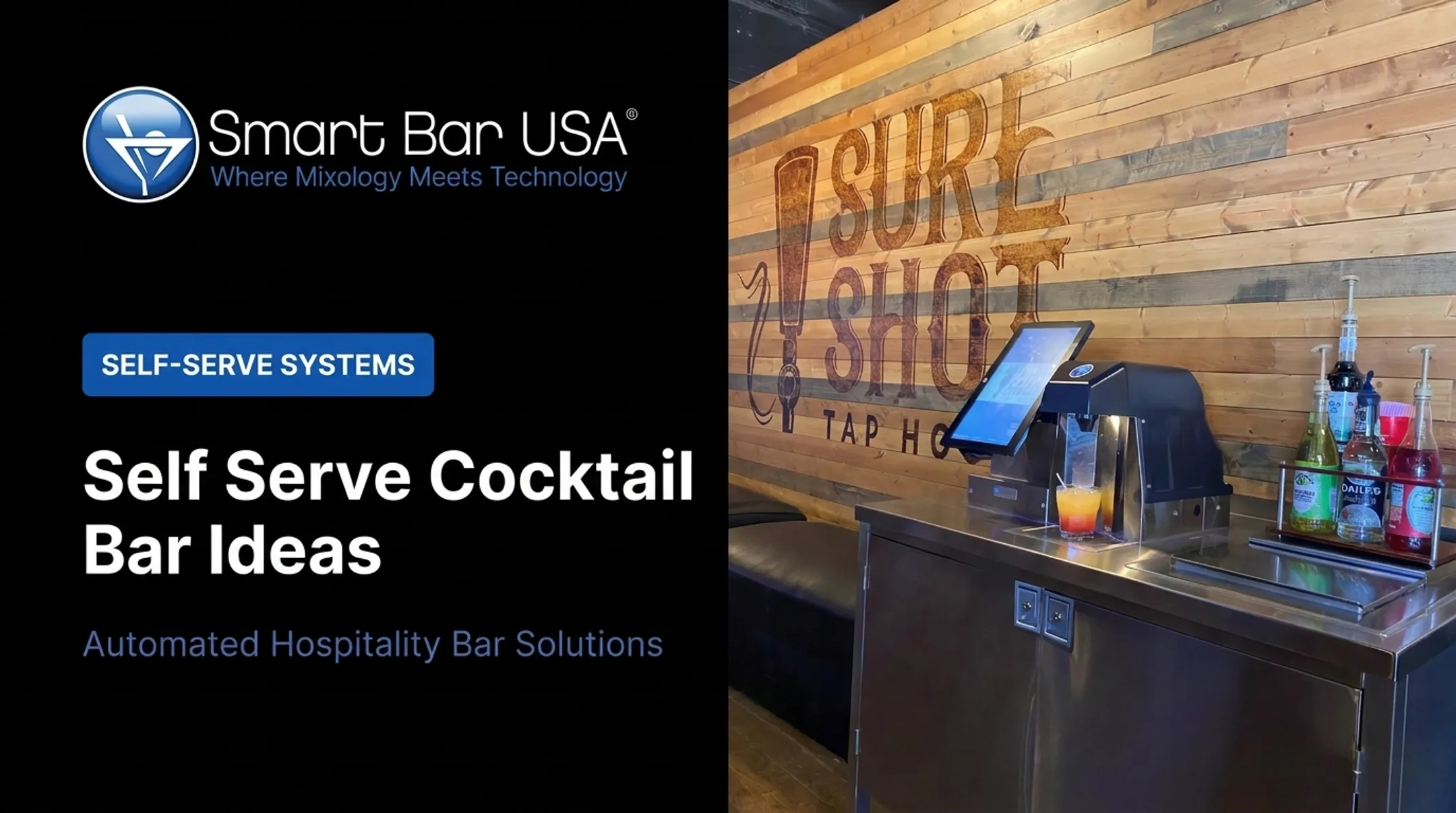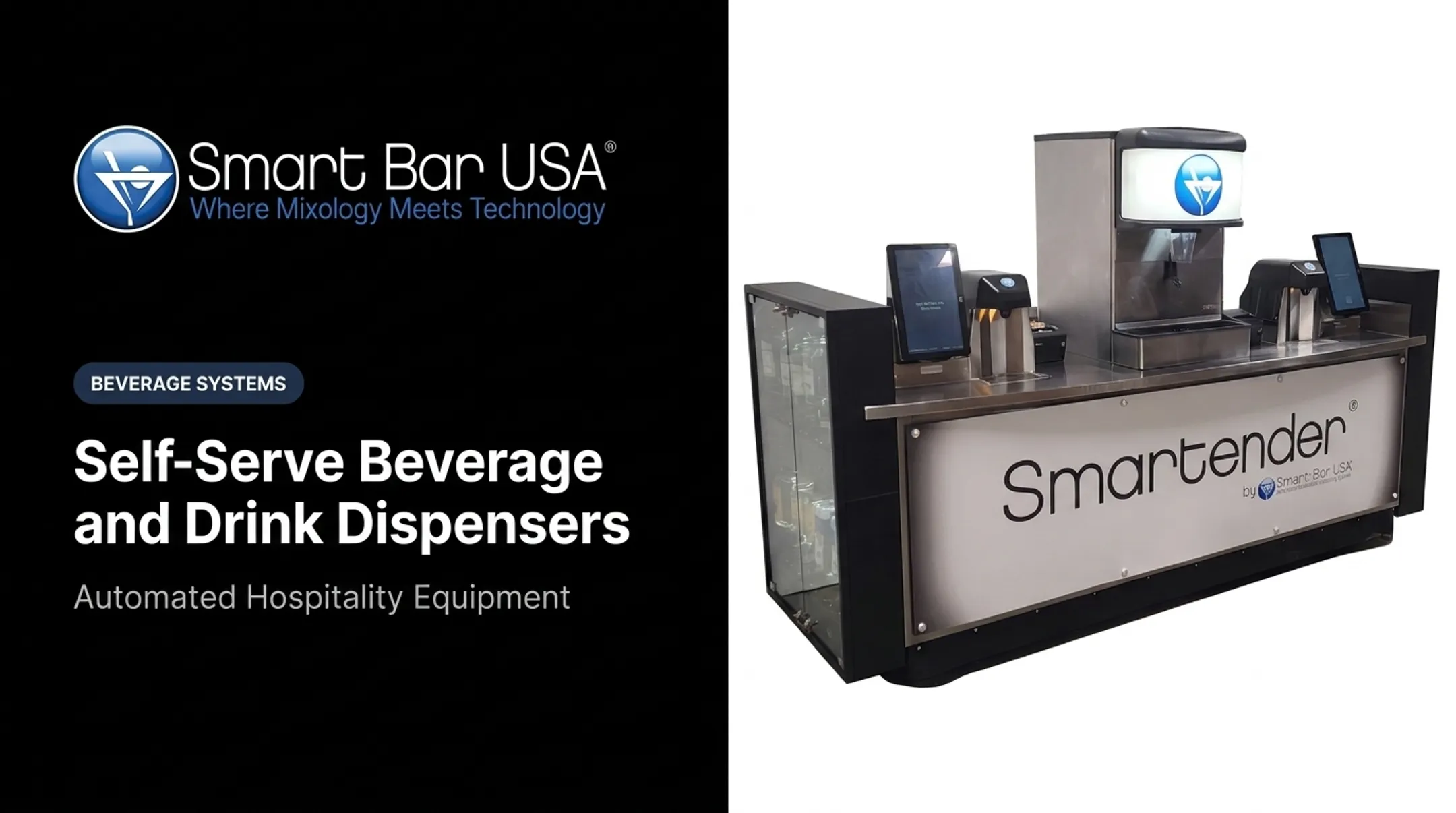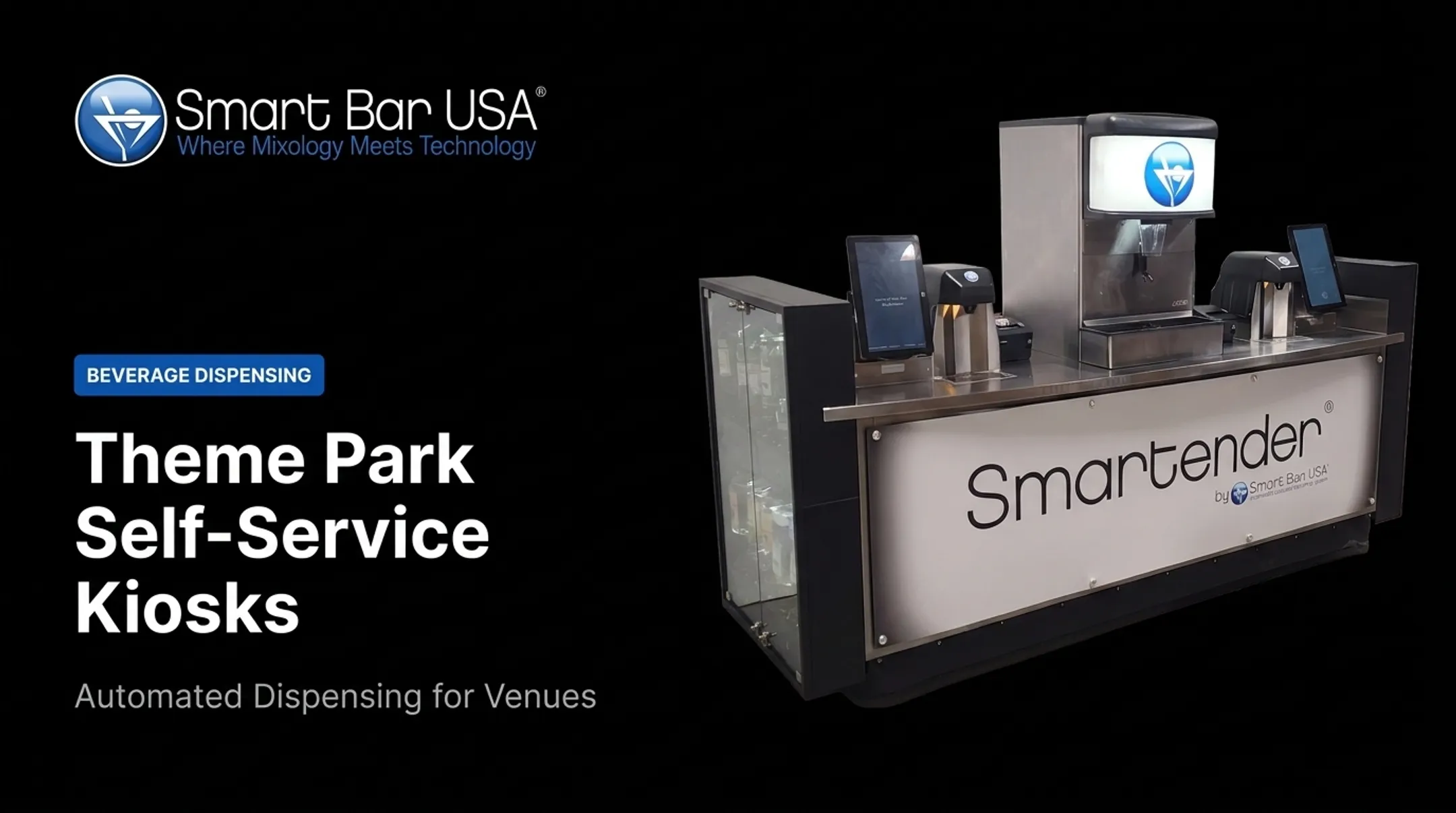

A self-serve setup can be as simple as a table with dispensers at a private event, or as sophisticated as a controlled automated cocktail station on a casino floor. Either way, the goal is the same: move drinks faster without losing control.
This guide covers choosing the right service model, planning your layout and menu, selecting equipment, managing safety and sanitation, and deciding whether automation makes sense for your operation.
Key Takeaways
- Design every station around convenience, beverage quality, guest flow, sanitation, and responsible service controls.
- Match the dispenser to beverage format, venue volume, temperature needs, and automation level.
- Evaluate portion accuracy, inventory visibility, POS compatibility, and alcohol-service procedures before installing anything.
- Automated systems fit best when you need consistent, high-volume service with limited counter space or staffing.
What Is a Self-Serve Drink Station?
A self-serve drink station is a designated area where guests, or authorized non-bartending staff, select and dispense beverages from labeled containers, taps, carafes, urns, or automated equipment.
There's a real difference between a basic self-pour setup and a commercial automated station:
- Basic self-pour: Guests operate a tap or spout directly, with minimal tracking beyond visual monitoring.
- Automated commercial systems: Control portion size, track every pour, support recipe programming, integrate with POS systems, maintain chilling, and limit access by time or credential.
The term covers alcoholic and non-alcoholic beverages alike, including water, coffee, tea, soda, beer, wine, batched cocktails, mocktails, and chilled specialty drinks. What separates a casual event table from a casino-grade installation is control: how precisely you can measure, track, and restrict what gets poured.
Take Smartender DUO as an example of the automated end of the spectrum. It retrieves prepaid or pre-ordered beverages through a QR-code scan and dispenses liquor and mixers with accuracy to within 1/16 of an ounce. No bartender is needed to interpret the order.

How to Plan a Self-Serve Beverage Station
Define the Service Goals and Guest Flow
Start by identifying your actual objective. Are you trying to:
- Reduce queues at a single, overloaded main bar?
- Extend service to a pool area, concourse, or gaming floor?
- Cover a staffing gap during a limited service window?
- Offer refreshments away from the main bar entirely?
Map when and where demand spikes. Entrances, pool decks, gaming floors, concourses, and lounges each have different traffic patterns. Pull venue-specific transaction data where you have it, so placement decisions are based on actual behavior, not guesswork.
Choose the Beverage Menu and Service Model
Match the menu to the audience and occasion. A hotel pool station doesn't need the same complexity as a casino cocktail lounge. Offer a deliberate mix of options rather than more drinks than the station can clearly explain and maintain.
Decide how beverages will be prepared:
- Pre-batched for consistency and speed
- Kegged for high-volume beer or wine
- Individual containers for simpler self-pour setups
- Automated mixing for cocktail programs with multiple ingredients
Factor these constraints into the model you choose:
- Carbonation and gas supply (CO2 or nitrogen)
- Temperature control and refrigeration needs
- Perishability and batch life
- Garnish or finishing steps guests can handle alone
A station serving fresh-juice cocktails needs refrigeration; a soda station often does not. Automated dispensers can help when recipes must stay consistent across shifts without a full bartender at every point of service.

Plan the Physical Layout
Clear zones prevent guest confusion and staff bottlenecks. Set up separate areas for:
- Dispensing
- Glassware or cups
- Ice and garnishes
- Payment or ID check
- Waste disposal
- Spill response
Guests should never need to cross into replenishment or staff-only zones. Add clear labels, menu cards, and visible pricing where required. Good signage reduces hesitation and helps guests pick the right glass, garnish, or serving size without asking staff.
Plan Capacity and Replenishment
Build a service-period plan covering beverage volume, backup product, ice, cups, CO2 or nitrogen where applicable, cleaning supplies, and waste collection. Base your quantities on guest count, operating hours, beverage mix, and historical sales.
Assign clear responsibilities:
- Who monitors the station?
- Who refills it and removes used items?
- Who responds to spills?
- Who restocks backup supplies without interrupting guest flow?
Build Alcohol-Service and Hygiene Safeguards
Alcohol legality is not one-size-fits-all across the US. Rules differ by state, and self-pour programs often need extra controls:
- Texas (TABC advisory): Permit-holder oversight, direct sale, a visible location, no automated sale at the machine, and a two-serving order limit
- Utah: Department-approved calibrated metering for any self-dispensed spirits
Confirm your state's current rules and required licensing before rolling out self-service alcohol.
Hygiene procedures matter just as much:
- Clean nozzles, taps, drip trays, ice tools, and glassware on manufacturer-recommended schedules
- Follow local health-code requirements (adoption varies by state, so verify with your local health authority)
- Distinguish routine wipe-downs from scheduled deep cleaning of beverage lines
Lock in goals, menu, layout, capacity, and compliance before install day—and the station is far more likely to run smoothly from the first service period.
Equipment and Technology for Self-Serve Beverage Stations
Select the Appropriate Dispenser Format
Different beverages need different dispensing technology:
| Beverage Type | Typical Equipment |
|---|---|
| Water, lemonade, batch drinks | Beverage urns, glass dispensers |
| Beer, wine, kombucha, cold brew, carbonated drinks | Draft systems |
| Multi-ingredient cocktails | Automated cocktail dispensers |
Choose based on viscosity, carbonation, temperature control needs, container capacity, counter space, electrical requirements, and how easily the unit cleans.
Understand the Core Components
Beyond the dispenser itself, plan for:
- Chilled storage
- Kegs or beverage containers
- Pumps, gas systems, and tubing
- Drip trays and ice storage
- Cups, glassware, and signage
- POS hardware
- Secure backup storage
Verify electrical, plumbing, and drainage requirements for your specific model before installation. Smartender A-Series units, for example, run on 120–240 VAC with a single ½-inch FNPT drain connection and carry ETL certification.

Compare Manual, Assisted, and Automated Service
Each model has trade-offs:
- Guest-operated batch stations: Fastest to set up, least control over portions
- Staff-assisted dispensing: More oversight, requires labor
- Fully automated systems: Highest pour consistency, lowest ongoing training need
At Wheels and Thrills, adding beer, wine, and cocktails through automation meant two managers handled all drink service with minimal training and zero recipe memorization.
That is the practical difference automation makes. New staff get up to speed in hours instead of days, and every drink matches specification regardless of who is on shift.
Consider Control, Measurement, and Integration Features
Portion control, pour tracking, and POS integration help operators manage costs directly. Smartender systems, for instance, track every ounce poured, which limits unauthorized extra pours and gives operators visibility into shrinkage. Systems can also restrict alcohol access by date and time through customizable service schedules.
Match the Technology to the Venue
The Smartender DUO is an automated self-service cocktail solution built to deliver drinks directly to patrons via twin-head dispensing, touchscreen ordering, and QR-code remote ordering. It's designed for bars, taverns, stadiums, arenas, cinemas, and entertainment centers.
Portable, modular, chilled, self-service, and remote-ordering configurations suit different footprints. Rather than assuming one product fits every operation, request a configuration review from Smart Bar USA to match equipment to your venue's specific layout and volume.
How to Operate a Self-Serve Drink Station
A well-run self-serve drink station depends on consistent prep, clear guest guidance, and active monitoring during service. Use the steps below to keep pours accurate, lines moving, and compliance intact.
Prepare the Station Before Service
Run through an opening checklist:
- Check beverage temperatures and container connections
- Verify recipe or menu labels are current
- Confirm glassware, cup, and ice levels
- Check garnish freshness
- Test payment or access controls
- Confirm spill supplies are stocked
- Run a test pour from every active line

Guide Guests Clearly and Safely
Give guests concise, visual instructions:
- Select a drink
- Place a cup
- Operate the dispenser
- Add garnish
- Dispose of waste
Keep staff visible enough to answer questions, monitor alcohol service, and step in if a spill creates a hazard.
Smartender DUO, for example, provides customizable on-screen prompts that guide patrons through the pouring process step by step, so first-time users aren't guessing.
Maintain Quality and Sanitation Throughout Service
Set inspection intervals for spills, drip trays, nozzles, ice bins, and beverage temperatures. Assign responsibility to named staff roles, not "whoever's around." Follow manufacturer and local health department guidance, and separate routine wipe-downs from scheduled deep cleaning.
Monitor Inventory, Waste, and Performance
Compare drinks dispensed against product consumed using POS records or pour counts. Investigate unusual variances, whether that's over-pours, leaks, or unauthorized use.
Track queue time, stockout frequency, and beverage margin using data you've actually verified, not industry averages that may not apply to your venue.
Prepare for Exceptions and Downtime
Keep a documented plan for empty containers, equipment faults, power interruptions, and payment failures. Stage backup beverages nearby without blocking guest paths. Define clearly when staff should close a dispenser or contact technical support.
Where Self-Serve Stations Work Best and How to Evaluate One
Match the Station to the Venue
Self-serve stations support a wide range of environments:
- Casinos and gaming floors
- Hotels and resorts
- Stadiums, arenas, and festivals
- Airports and lounges
- Restaurants and multi-location bar chains
- Convention spaces and entertainment venues
The right setup depends on how you serve:
- Portable service for temporary events and festivals
- Distributed stations for large footprints like stadiums and arenas
- Consistent recipe programming for multi-location operators
- Controlled automated cocktails for high-volume floors where labor is tight, such as casinos

Recipe control matters when bar skill is limited on site. Playland Skate Center’s owner was new to selling alcohol and worried about procedures, but loaded recipes meant she could run the program without a mixologist on staff.
Assess Operational Readiness Before Investing
Before you buy anything, check:
- Expected demand and beverage mix
- Floor space, power, and cooling requirements
- Plumbing or gas needs
- Staffing and cleaning capacity
- Alcohol controls required by your state
- POS compatibility
Look at full cost of ownership, not just sticker price. That includes installation, consumables, software integration, cleaning, repairs, training, and replacement parts. Base any ROI projection on your own venue's data or a documented case study, not assumed savings.
Talk to Smart Bar USA Before You Decide
Smart Bar USA has developed automated beverage systems since 2012, manufacturing in the US with a focus on speed, consistency, and accuracy. If you're weighing layout options, beverage program complexity, or service volume against automation goals, discuss your specific setup with the Smart Bar USA team before committing to a system.
Frequently Asked Questions
What is a self-serve drink station?
A self-serve drink station is a designated area where guests or authorized staff dispense beverages from taps, urns, carafes, or automated equipment. It ranges from a simple self-pour table to a fully controlled automated cocktail system.
What are the drink dispensers used in a self-serve drink station called?
Common options include beverage dispensers, drink urns, carafes, draft systems, keg taps, and automated cocktail dispensers. The correct term depends on the beverage format you're serving.
How do I set up a self-serve beverage station for a high-volume venue?
Focus on location, guest flow, menu selection, and equipment capacity matched to your demand. Add clear signage, a replenishment plan, monitoring procedures, and sanitation and responsible alcohol-service protocols.
Are self-serve alcohol stations legal in the US?
Requirements vary significantly by state and locality, often involving licensing, age verification, staff oversight, and portion controls. Confirm exact requirements with your state's alcohol authority and legal counsel before installing.
What drinks work best in a self-serve beverage station?
It depends on your equipment and control needs. Water and soft drinks work in basic setups; cocktails, wine, and mixed drinks typically need automated dispensing for portion accuracy and consistency.
How do self-serve drink stations reduce labor and beverage waste?
Distributed service, portion control, and pour tracking can reduce over-pouring and give operators inventory visibility. Actual results depend on your venue design, beverage mix, and staff procedures.