
Many venue operators struggle with the same problem: long lines, inconsistent pours, and staffing shortages that cap revenue right when demand peaks. This guide is built for US event hosts, hospitality operators, entertainment venues, and event planners who want real options, not just novelty.
We'll cover format ideas, layout planning, equipment considerations, and the compliance requirements you can't skip.
Key Takeaways
- Match your self-serve format to venue type, guest volume, staffing, and menu complexity
- Keep menus curated and clearly labeled, with nonalcoholic options given equal visual weight
- Age verification, pour control, and staff oversight are non-negotiable, not optional add-ons
- Weigh equipment choice against guest flow, POS needs, portability, and total ownership cost
What Is a Self-Serve Cocktail Bar?
A self-serve cocktail bar is a setup where guests select, assemble, or receive drinks with limited bartender involvement. Staff still handle oversight, replenishment, cleaning, and responsible service. This isn't a hands-off operation.
How It Works
The typical guest journey looks like this:
- Age or account verification
- Menu selection (often via touchscreen or QR code)
- Payment or tab authorization
- Controlled dispensing or drink assembly
- Transaction and pour tracking

Systems may use wristbands, QR codes, POS accounts, or card-based access. Always confirm which technologies your state and local jurisdiction actually permit before you commit to a system.
Self-Serve Bar vs. Self-Pour Tap House vs. DIY Station
These terms get used interchangeably, but they're not the same thing:
- Self-pour tap house: Meters beer, wine, or cider by the ounce from taps (an open-pour model)
- DIY drink station: Guests mix their own drinks from prepared ingredients, with no automated portioning
- Automated cocktail bar: Uses dispensing technology to deliver consistent, pre-measured portions or finished cocktails
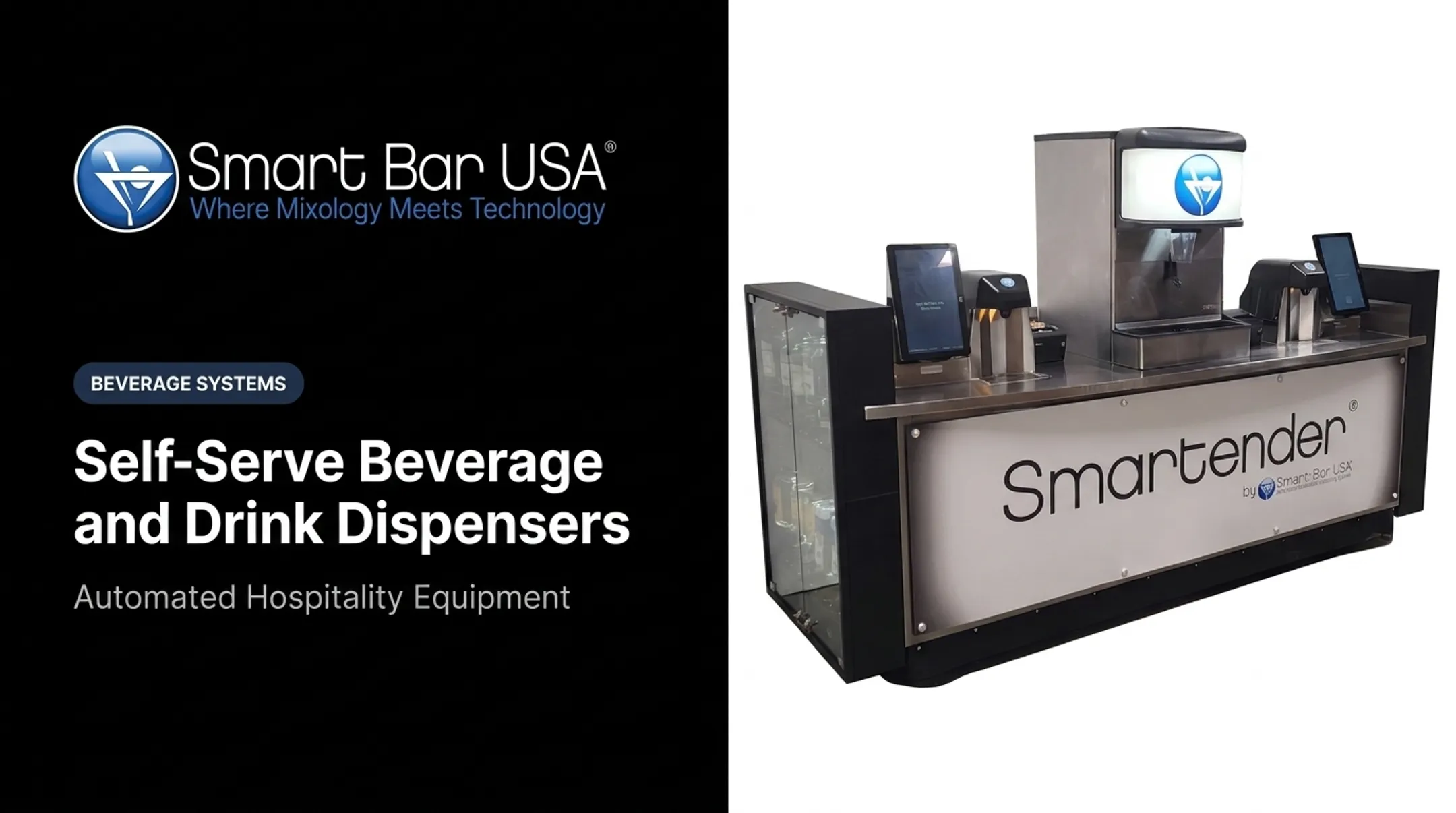
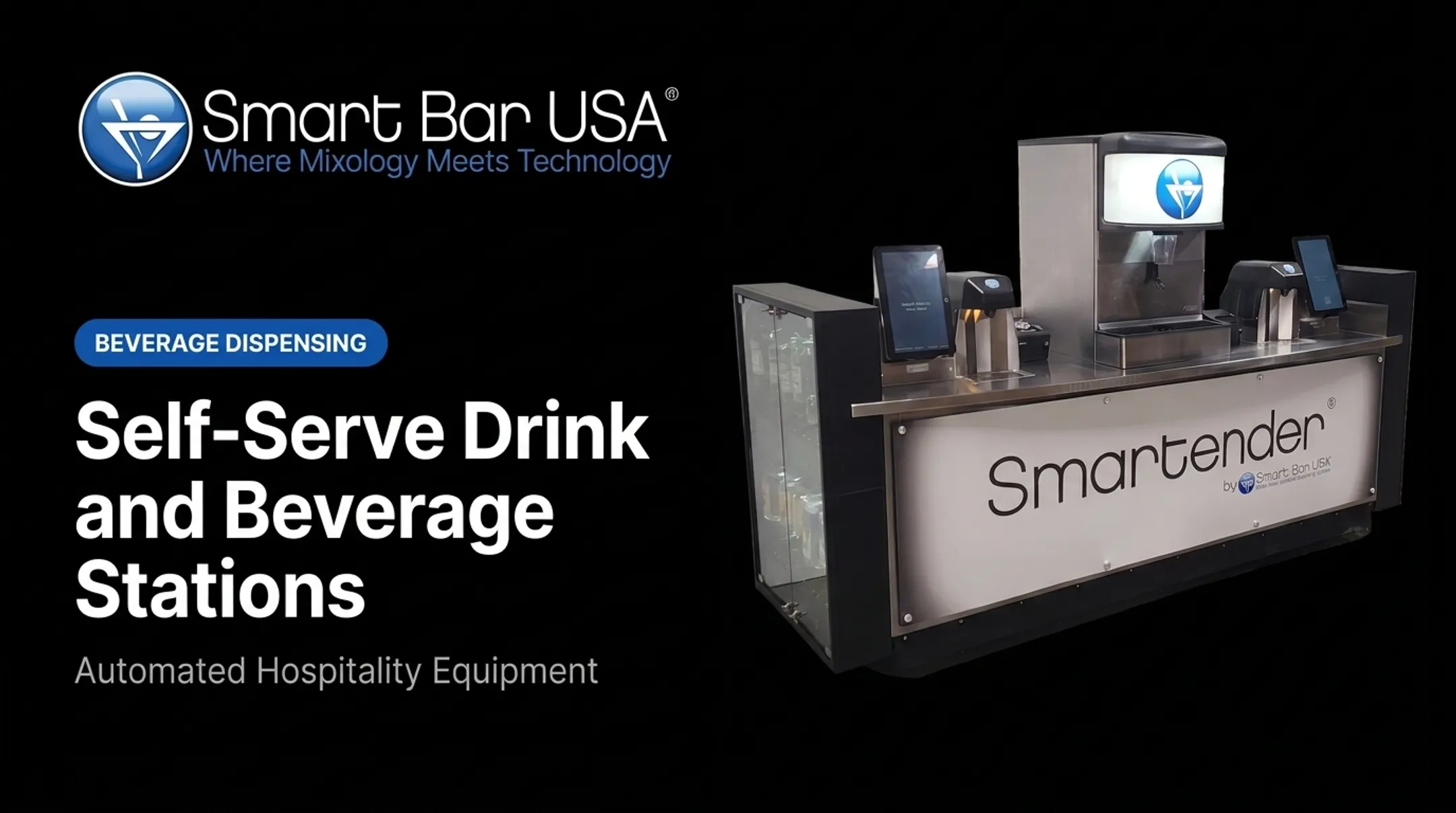
Self-serve concepts fit private receptions, hotels, casinos, restaurants, food halls, nightclubs, stadiums, airports, family entertainment centers, and convention spaces. Smart Bar USA's Smartender® DUO, for example, is built for high-traffic hotels, casinos, and stadiums, where pour times under four seconds make a real difference during rush.
Benefits and Limitations
Benefits:
- Shorter queues during peak demand
- Consistent recipes, pour after pour
- Reduced waste and over-pouring
- Lower labor pressure on staff
- Higher throughput without adding headcount
Limitations to plan around:
- Menu complexity can slow service down
- Equipment needs regular maintenance
- Compliance requirements vary by state
- Cleaning and sanitation demands don't disappear
- Staff supervision is still required, always

Self-Serve Cocktail Bar Ideas
Batched Signature Cocktail Station
Pick one or two pre-batched cocktails — a spritz, punch, or highball — that dispense from a labeled container without shaking or complex prep. Add recipe cards, garnish bowls, ice, and glassware. Offer a nonalcoholic version side by side where practical.
Automated Cocktail Dispensing Bar
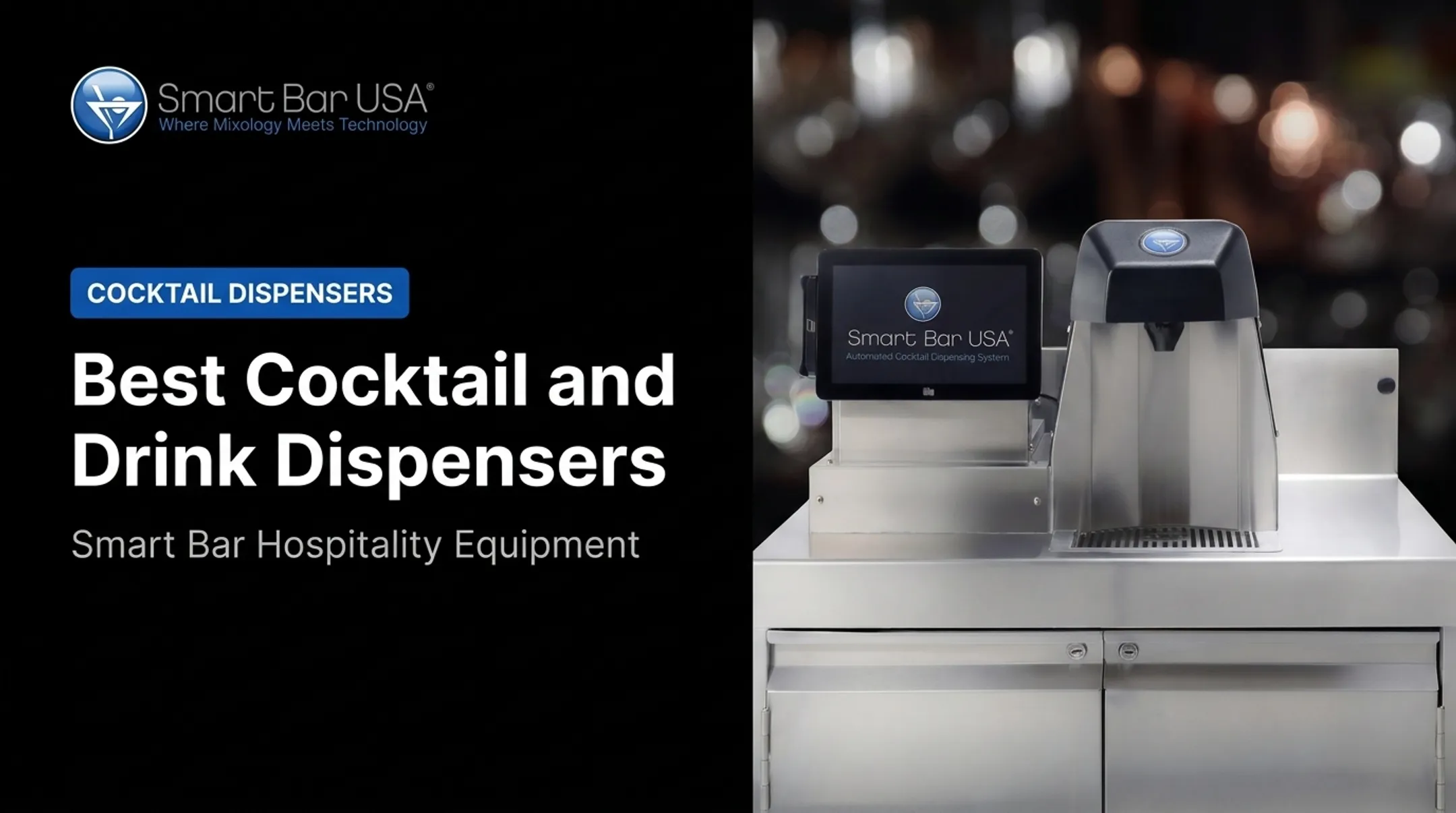
For venues needing rapid, repeatable service during peak periods, an automated dispenser handles a curated cocktail menu with controlled portions and recipe consistency. Smart Bar USA's Smartender® systems deliver pours accurate to within 1/16th of an ounce, with POS connectivity and pour tracking built in.
Cocktail Tasting or Flight Station
Let guests sample several cocktails in smaller, controlled servings where local regulations allow. Include:
- Flavor notes and menu descriptions
- Food pairing suggestions
- A logical tasting progression
This feels intentional and educational, not like an uncontrolled free-pour setup.
Portable Pop-Up Cocktail Bar
Perfect for weddings, festivals, and poolside events where a permanent bar isn't practical. Plan for:
- Compact, self-contained equipment
- Power and water logistics
- Quick setup and teardown
- Backup supplies on hand
- A secure method for moving the unit
Smartender® GO, a portable self-contained bar, was built for exactly this: operators with limited space or changing service locations who want to skip the time and expense of traditional pop-up setup.

Venue-Themed Self-Serve Bar
The same underlying concept adapts to different venues:
- Pool or resort: Tropical drinks, fast turnover
- Casino lounge: Premium cocktails, 24/7 availability
- Stadium: Speed above all else
- Food hall: Drinks paired with food vendors
- Family entertainment center: Mocktail-forward, family-friendly
Connect your drink menu, design, and controls to actual guest behavior at your venue, not a generic template.
Inclusive Cocktail and Mocktail Bar
Build a dedicated no- and low-alcohol section with sparkling drinks, mocktails, and flavored water — not an afterthought bolted onto the main menu. Premium mocktails can add $5 to $10 per check even without alcohol, so this isn't just a courtesy offering; it's a revenue line.
Label allergens clearly, separate utensils where needed, and give the nonalcoholic area the same visual polish as the cocktail selection.
How to Design the Bar Experience
Curate the Menu and Stock the Station
Stick to a focused menu: familiar options, a few distinctive choices, and clear labeling for ingredients, strength, and allergens. Drinks with too many fresh, perishable components slow service and create more sanitation demands than batched or automated recipes.
Your setup checklist should cover:
- Spirits or premixes, chilled and stocked
- Ice, cups, straws, napkins, garnishes
- Cleaning supplies and spare containers
- Backup menu items in case something runs out
Assign someone specific to check inventory, temperatures, and equipment status throughout service — not "whoever's free."
Plan Zones, Guest Flow, and Accessibility
Map the full guest journey so traffic moves in one clear direction:
- Entry and age verification
- Menu selection and dispensing
- Garnish, payment, and pickup
- Seating and waste disposal
Separate queues, refill access, and used-glass collection so guests aren't tripping over each other or wandering into staff-only zones.
Don't skip accessibility. Under ADA Standards, accessible service counters need a parallel-approach section at least 36 inches long and no higher than 36 inches, or a forward-approach section at least 30 inches long and no higher than 36 inches. Controls should sit within a reach range of 15 to 48 inches.

Guide Guests Clearly, Then Test Before Opening
Once the layout works, signage has to carry the experience without staff at every step. Menu boards, numbered steps, pricing, ingredient labels, and QR codes all reduce confusion at the point of order. Add branded panels or seasonal decor, but never let design elements block signage, equipment access, or accessible paths.
Run a staff simulation covering normal and peak demand:
- Queue length and pour speed
- Recipe accuracy and payment flow
- Equipment recovery after a fault
Build a short staff playbook for age-verification issues, failed transactions, intoxicated guests, and refunds.
How to Choose Equipment and Plan Operations
Match Equipment to Your Service Model
Portable, modular, permanent, and chilled systems all serve different needs. Match the hardware to how you plan to serve:
- Permanent installs with recipe standardization at scale: Smartender® Modular in 8, 18, 34, or 50 liquor-capacity models
- Temporary events and pop-ups: Smartender® GO self-contained portable bar
- Full guest self-service: Smartender® DUO twin-head system with touchscreen ordering
- Perishable or refrigerated beverages: Smartender® CHILL for cold-chain cocktail and mixer service
Confirm current specs and installation requirements with Smart Bar USA directly.
Connect Dispensing Tech to Your Wider Operating System
Look for:
- POS integration and order routing
- Pour tracking and inventory reporting
- Remote ordering via QR codes
- Multi-unit connectivity for large venues
- Bottle-empty alerts and service-schedule permissions
Confirm compatibility with your existing payment, refrigeration, electrical, and network infrastructure before installation day.
Build a Realistic Cost and ROI Model
Account for equipment, installation, licensing, ingredients, refrigeration, maintenance, staffing, and payment fees. As one reference point: at an average price of $8 per cocktail, selling just 10 additional drinks per day adds roughly $25,000 per year in revenue. Push that to 20 to 30 extra drinks daily and you are looking at about $50,000–$85,000 annually.

For context on labor, the National Restaurant Association reports that 2024 wages and benefits represented a median 36.5% of sales for full-service restaurants. That figure is a useful benchmark when weighing automation against staffed service, though the Association notes it is not an operating standard for any single business.
Safety, Compliance, and Responsible Service
Verify Alcohol-Service Requirements Before Launch
Rules vary by state. Connecticut, for example, requires Liquor Control approval for self-pour systems, constant video surveillance during operating hours, and footage retention for 60 days. Michigan permits self-service dispensing up to 96 ounces at a customer's table.
Confirm your state's requirements with the relevant ABC authority and a qualified compliance professional before you install anything.
Prevent Over-Service and Unauthorized Access
Build in these controls:
- Approved ID checks matched to payment method
- Drink or volume limits per patron
- Staff monitoring throughout service hours
- A clear refusal procedure for intoxicated or underage guests
You may come across the "2-2-2 rule for alcohol" online. No authoritative government or training body source confirms this as a universal legal standard. Treat it as informal guidance at best, not a compliance substitute.
Maintain Sanitation, Accessibility, and Equipment Safety
Nozzles, lines, touchscreens, and glassware all need documented cleaning schedules. Washington's state food code, for instance, requires dispensing equipment designed to prevent contact with lip-contact surfaces of cups or glasses.
Document these items in your operations manual as well:
- Spill response procedures and emergency shutoffs
- Routine preventive maintenance
- ADA-friendly layout: reach ranges, clear floor space, and accessible controls
Frequently Asked Questions
What is a self-service bar?
A self-service bar lets guests select, order, or receive drinks with limited bartender involvement. Staff still oversee replenishment, cleaning, and responsible alcohol service during service.
How do self-serve bars work?
Guests typically verify age or authorize a tab, select a drink from a menu, and receive a controlled pour or assembled cocktail. Payment and staff monitoring happen throughout the process.
What are examples of self-service bars?
Examples include self-pour tap walls, automated cocktail dispensers, batched drink stations, hotel beverage stations, and patron-facing systems like Smartender® DUO.
What is a self-pour tap house?
A self-pour tap house meters beer, wine, or cider by the ounce from taps, distinct from recipe-based automated cocktail dispensing. Beverage rules and available formats vary by state and venue.
What is the 2-2-2 rule for alcohol?
This isn't a confirmed legal standard from any authoritative government or training source. Follow your state's Responsible Beverage Service guidelines rather than a universal rule.