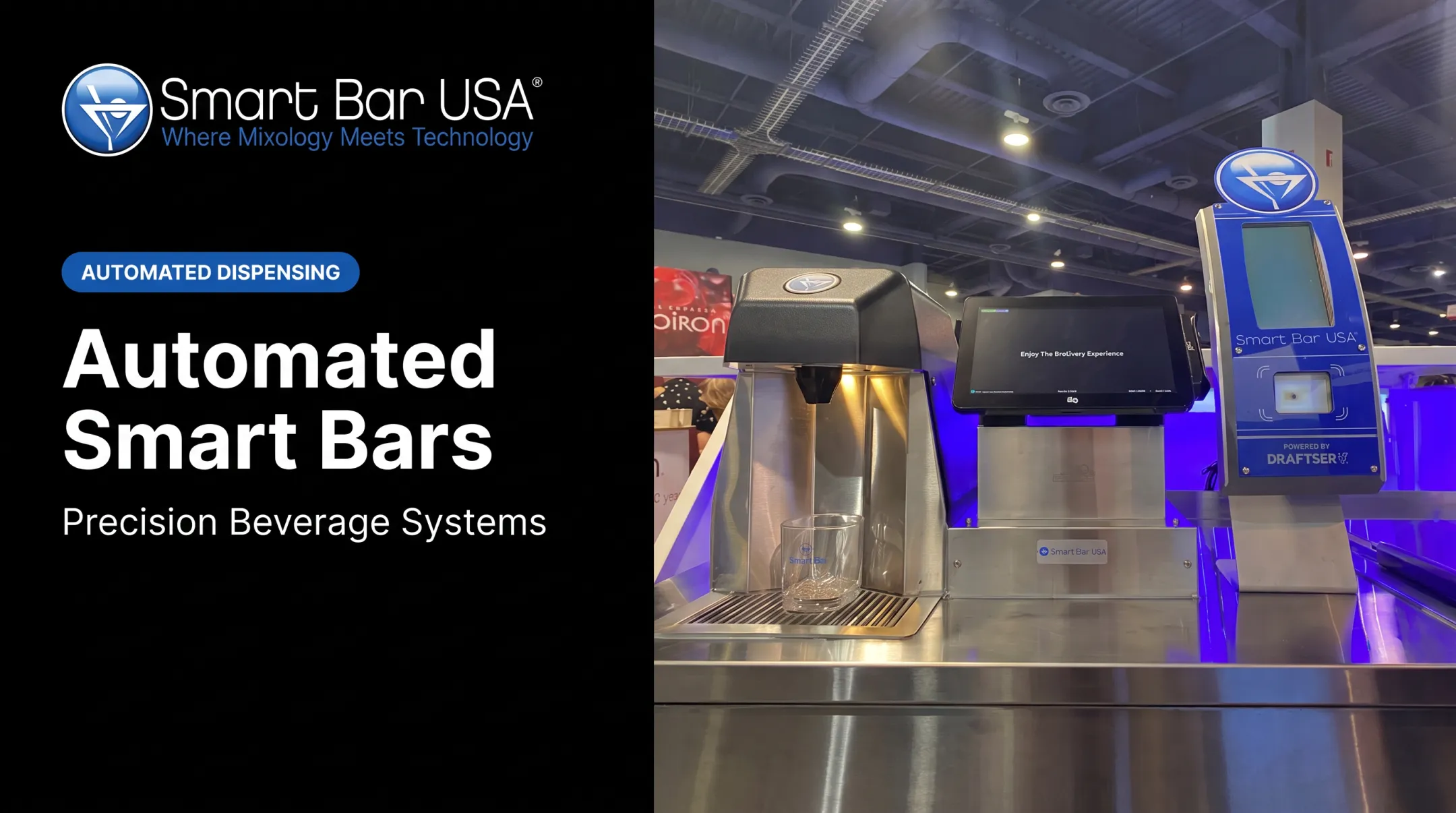

Enter the "robot bartender." The label covers a wide range of technology, from touchscreen dispensers that pour a measured shot in under four seconds to robotic arms that shake, stir, and hand off a finished cocktail. Some systems require an attendant. Others let guests order and collect drinks themselves.
This article breaks down how these systems actually work, where they create real value, what they can't do without human oversight, and how to evaluate one for your venue.
Key Takeaways
- Systems automate measuring, dispensing, mixing, and sometimes ordering—not full bar operations.
- The strongest ROI case comes from speed, pour consistency, and waste reduction during peak periods.
- Staff still own responsible service, cleaning, and oversight—automation doesn't replace them.
- Match volume, menu complexity, POS needs, certifications, and total cost before you buy.
What Is a Robot Bartender?
What the Term Actually Means
"Robot bartender" gets applied loosely. In practice, commercial systems fall into a few categories:
- Metered dispensing systems operated by staff, logging pours directly to POS
- Robotic-arm systems that physically shake, stir, and pour using mechanical arms
- Self-service kiosks where guests order and collect drinks without staff
- Modular countertop dispensers built into existing bar infrastructure
Most commercial installations aren't humanoid robots. They're compact dispensing platforms—think pumps, tubing, and calibrated nozzles rather than anything resembling an android with a shaker.

Why Businesses Adopt This Technology
The trigger is usually staffing pressure combined with service-speed demands. The Bureau of Labor Statistics projects roughly 129,600 bartender openings annually through 2034, a number that reflects how much turnover this role sees industry-wide.
Operators aren't typically trying to eliminate bartenders entirely. They're trying to automate the repetitive part, measuring and pouring, so staff can focus on:
- Guest interaction and hospitality
- Exception handling (custom orders, complaints)
- Compliance and age verification
- Restocking and troubleshooting
How It Differs From a Traditional Bar
A traditional bar relies on individual technique. Pour accuracy varies by bartender, shift, and how busy the rail gets. Automated dispensing standardizes that variable. The tradeoff is customization. A machine handles a defined menu well, but improvising a guest's off-menu request isn't its strength.
How Does a Robot Bartender Work?
Robot bartenders follow a clear path: store ingredients, run a recipe, dispense or mix, then hand off the drink. What changes by model is how much of that path is automated—and how much still needs staff.
Ingredient Storage and Dispensing
Spirits, mixers, and syrups sit in containers linked by tubing, pumps, and valves. Some systems, like Smart Bar USA's Smartender CHILL, add built-in refrigeration for fresh juices and perishable mixers. Others run at ambient temperature only.
Calibrated pours are what lock in consistency. Smartender A-Series systems dispense to within 1/16 of an ounce, averaging about four seconds per drink.
Ice, garnish, and carbonation are not universal. Coverage depends on the model, so confirm those capabilities before you buy.
Recipe Software and Order Control
Once a recipe is selected, the software runs a timed sequence of ingredient releases. Operators typically control orders through:
- Touchscreen selection at the unit
- QR-code mobile ordering routed straight to the dispenser
- POS-integrated workflows that pour only after the sale is rung up
Smart Bar's platform can store hundreds of custom cocktails and manage multiple units remotely through cloud software. That helps multi-location operators keep the same recipes across every venue.
Mixing, Shaking, and Presentation
After the pour, finishing methods split by system type:
- Direct dispense — ingredients go straight into the cup, no shaking
- Simultaneous pour — liquor and mixer meet through one nozzle
- Robotic-arm mixing — mechanical arms work a shaker, then pour

Ice, garnishes, and cup sealing still vary widely. "Automated" rarely means fully hands-off from order to presentation.
The Customer and Staff Workflow
A typical ticket moves through selection, payment, age or service checks, dispensing, and handoff. Staff still step in at key points:
- Verifying age or ID on alcoholic orders
- Placing or retrieving the cup at self-service units
- Handling exceptions or complaints
- Restocking ingredients between rushes
Cleaning, Maintenance, and Safety
Dispensing hardware does not clean itself. FDA Food Code guidance requires protecting tubes and orifices from contamination, and beverage lines must be cleaned on the manufacturer’s schedule. Build a documented routine that covers:
- Line flushing and container changes
- Spill and calibration checks
- Software updates and preventive maintenance
- Local alcohol-service rules for unattended or self-service formats
What Are the Benefits for Hospitality Operators?
Faster Service During Peak Periods
Speed is the headline benefit. At Resorts World Las Vegas, Smartender systems deliver four liquors and one mixer in under five seconds. Atomic Golf combined four Smartender systems with connected ordering to hit throughput of up to 1,440 drinks per hour during rushes.

Consistent Recipes and Accurate Pours
Calibrated dispensing reduces variation between shifts and locations. Pearl River Resort & Casino started with a trial of Smartender Modular units to address bartender shortages, then expanded to six additional units after seeing efficiency gains.
Labor Leverage, Not Labor Replacement
Automation handles repetitive pouring. Staff still manage:
- Guest interaction and problem-solving
- Responsible service and ID checks
- Restocking and cleaning
- Overall floor oversight
A robot bartender can reduce headcount needed for pouring tasks. It doesn't automatically replace every front-of-house role, and vendors that promise otherwise are overselling.
Inventory Control and Waste Reduction
Measured pours make over-pouring and shrinkage easier to spot. At Dogwood Social Club, operator Andy Patel reported that Smartender systems reduced shrinkage and labor costs while improving service reliability.
Revenue and Guest-Experience Tradeoffs
Faster service and self-service formats can open additional revenue points where staffing a full bar isn't practical, such as a golf course turn or a stadium concourse. Real tradeoffs still apply:
- Novelty-driven demand can fade after the first season
- Some guests prefer a human bartender's interaction
- Menu size is inherently more limited than a full bar
- Equipment downtime becomes a service risk without a maintenance plan
What Types of Robot Bartenders Are Available?
Robot bartenders usually fall into a few deployment categories: fixed modular bars, portable event units, and self-serve or show-focused systems.
Fixed Countertop and Modular Systems
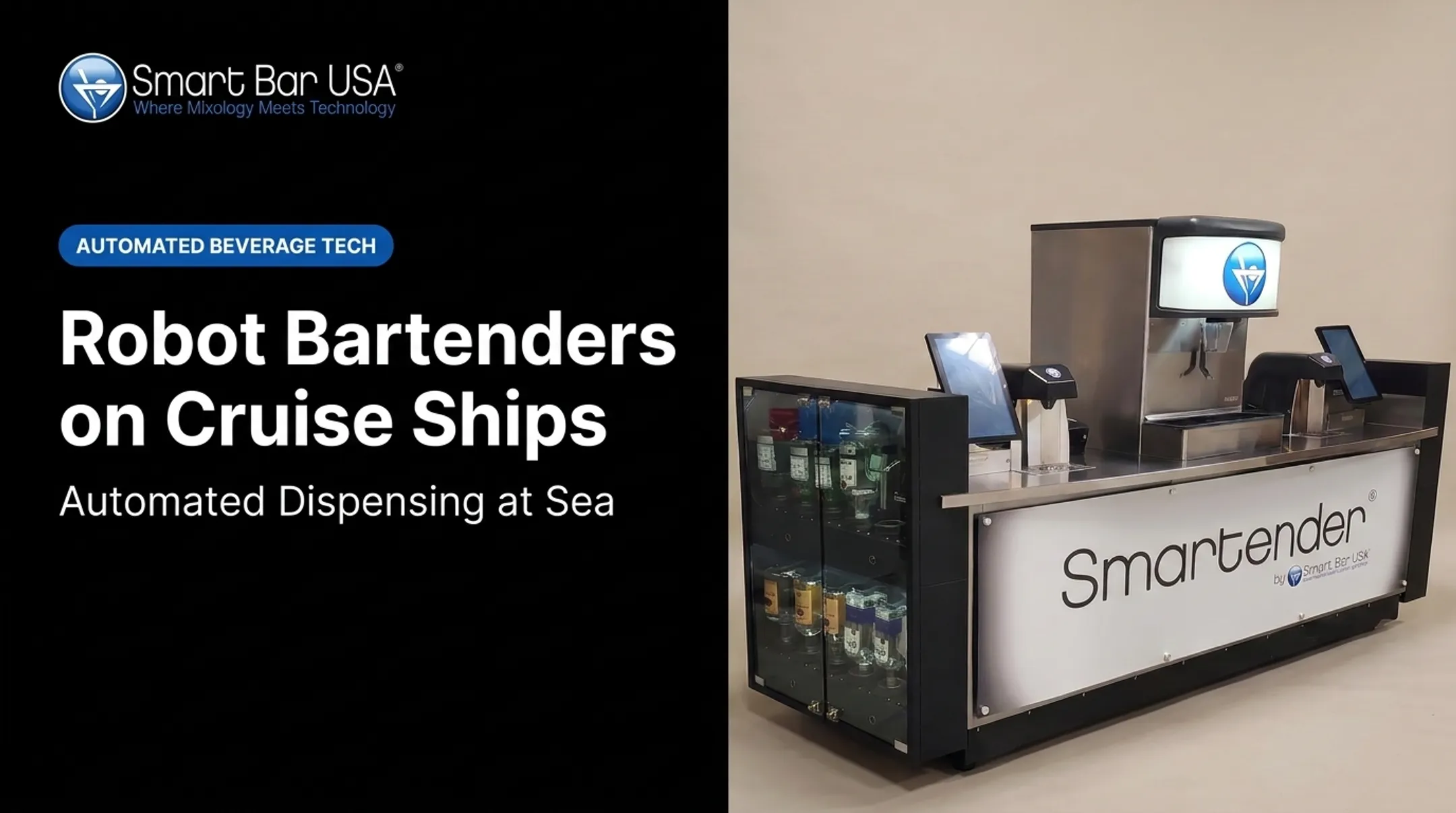
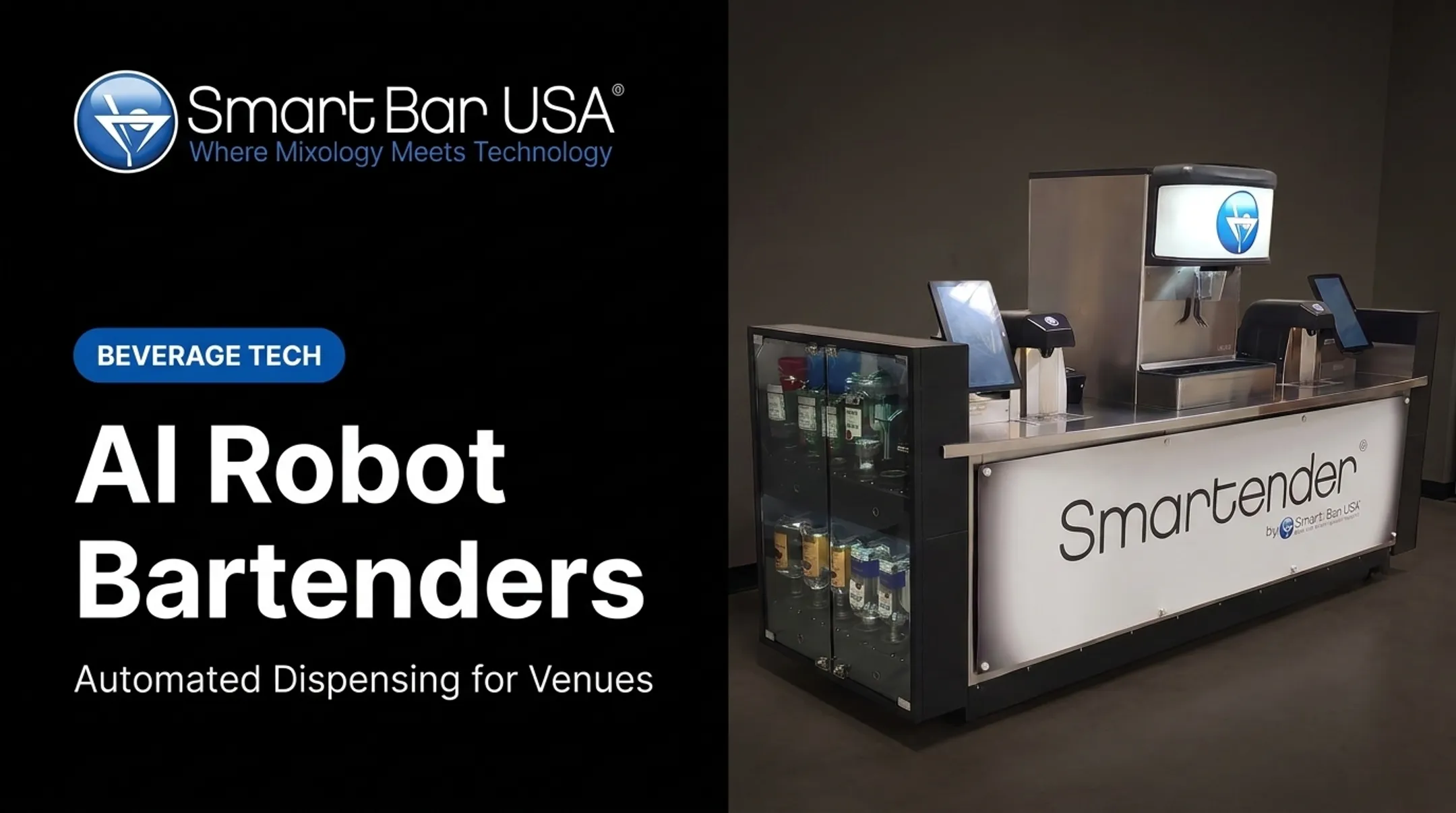
Permanent installations like the Smartender A-Series integrate into existing bar footprints. Models hold 8, 18, 34, or 50 liquors and need counter space, power, and drainage planned before install.
Portable and Event-Focused Systems
Smartender GO is fully self-contained, with onboard water, ice, CO2, and waste handling. It fits pop-up bars, festivals, and stadium activations where setup speed matters and no plumbing hookup is available.
Self-Service and Robotic-Arm Experiences
Self-service units like Smartender DUO let guests order via touchscreen or QR code and collect their own drink.
Robotic-arm systems such as Makr Shakr's Toni add visible showmanship for entertainment-driven venues. Age verification and attendant staffing still apply for unattended formats.

What Should You Consider Before Buying One?
A robot bartender only pays off if it fits how you serve and what it costs to run—not just what it costs to buy. Work through these checks before you commit.
Service environment — Document peak order volume, service locations, and whether you need attended, self-service, or mobile formats. Match that against ingredient channels and recovery time between orders.
Menu flexibility and drink quality — Test cocktails from your actual menu, especially drinks with unusual viscosity or multiple finishing steps. Garnish and ice handling differ by system.
Integration and infrastructure — Confirm compatibility with your specific POS and payment provider, not a generic claim. Also verify:
- Wi-Fi/network requirements
- Power and refrigeration needs
- Counter dimensions and plumbing
Sanitation and compliance — Look for ETL and NSF certifications, documented cleaning procedures, and age-verification support that fits your state's alcohol regulations—especially for self-service.
Total cost and return — Separate equipment price from installation, software licensing, training, and service contracts. Build ROI from your numbers: labor hours affected, drink volume, margin per drink, and expected uptime.
Matching Smartender Systems to Venue Needs
Smart Bar USA, founded in Las Vegas in 2012, builds the Smartender family for high-volume hospitality:
- Permanent bar integration → Smartender Modular (A-Series), for casinos and restaurants
- Mobile deployment → Smartender GO, for pop-ups and stadium activations
- Guest-facing self-service → Smartender DUO, for concert venues and arenas
Systems carry ETL certifications and are made in the USA. Confirm specifications and pricing with the manufacturer for your venue configuration.
Frequently Asked Questions
How much does a robotic bartender cost?
Pricing varies by system type, capacity, and installation requirements. Request a full quote and compare total cost of ownership, not just equipment price.
How much does a robotic server cost?
Beverage dispensers differ from mobile restaurant server robots in capability and price. Drink capacity, installation, and POS integration usually drive cost more than the base unit—ask for a quote and compare total cost of ownership.
Are there robot cocktail makers available?
Yes. Commercial automated cocktail makers come in fixed, portable, self-service, and robotic-arm formats. Capabilities and required human oversight differ substantially between them.
What is the machine called that makes mixed drinks?
Common terms include "automated cocktail dispenser," "automated bar," and "robotic bartender." Dispenser terminology is most accurate for pump-based systems; "robotic" typically implies mechanical arm movement.
How does a robot bartender work?
Most systems take an order, pull a recipe, then dispense through calibrated pumps or valves before staff or the guest takes the drink. Not every machine handles garnishing or ice without people involved.
Can a robot bartender replace a human bartender?
Automation handles repetitive dispensing well, but staff are still needed for responsible service, guest interaction, exceptions, and cleaning. Most venues use robots to multiply bartender capacity, not remove the team.