
High-volume venues face the same recurring headaches. Lines back up during rushes. Pours vary from bartender to bartender. Labor is expensive and hard to find. Over-pouring and spillage quietly eat into margins. Service windows at stadiums and events are short and unforgiving.
This guide walks through how professional cocktail machines work, what configurations exist, the benefits they offer, and how to figure out if one fits your venue.
Key Takeaways
- Professional automated cocktail makers standardize recipes and speed service in high-volume commercial venues.
- Choose a system based on pour volume, menu complexity, footprint, staffing model, and POS setup.
- Automation supports speed and consistency, but still needs cleaning, oversight, and responsible-service procedures.
- Judge systems by labor, waste, and throughput gains—not novelty features borrowed from consumer gadgets.
What Is a Professional Cocktail Maker?
People vs. equipment. A bartender or mixologist is a trained person who mixes and serves drinks, often stocking inventory and using judgment on every pour. A professional cocktail machine, automated cocktail dispenser, or automated bar system is equipment designed to meter recipe ingredients into a serving container.
Commercial vs. consumer. Professional systems differ from home cocktail machines:
- Built for continuous, high-volume commercial use, not occasional home mixing
- Support dozens of liquors per unit (Smartender's A-Series, for example, comes in 8-, 18-, 34-, and 50-liquor configurations)
- Integrate with POS systems, reporting software, and multi-unit management
- Designed for repeatable service workflows, not novelty
"Robot bartender" is often marketing language rather than a technical description. Some systems are dispensers with pumps and touchscreens. Others use robotic arms or guest-facing kiosks. Ask what a system actually does before assuming the label tells you anything useful.
The Role of Automation in Modern Beverage Service
Automated systems work best alongside bartenders, not instead of them. Equipment handles the repeatable, high-volume pours. Staff handle guest interaction, garnishing, and the judgment calls that come with hospitality.
This matters most when a venue needs the same recipe served identically across:
- Multiple bars within one property
- Different shifts and staff
- Multiple locations in a restaurant group
- Temporary event spaces
What These Systems Are Not Designed to Do
An automated dispenser won't replace fresh garnishes, hand-shaken technique, or the judgment a bartender applies to a custom substitution. Treat it as an operational tool, not a stand-in for skilled staff or a guarantee of higher guest satisfaction.
The National Restaurant Association's 2024 technology report found that 69% of operators expect technology to augment labor, not replace it.
How Professional Cocktail Makers Work
Liquid Supply and Dispensing
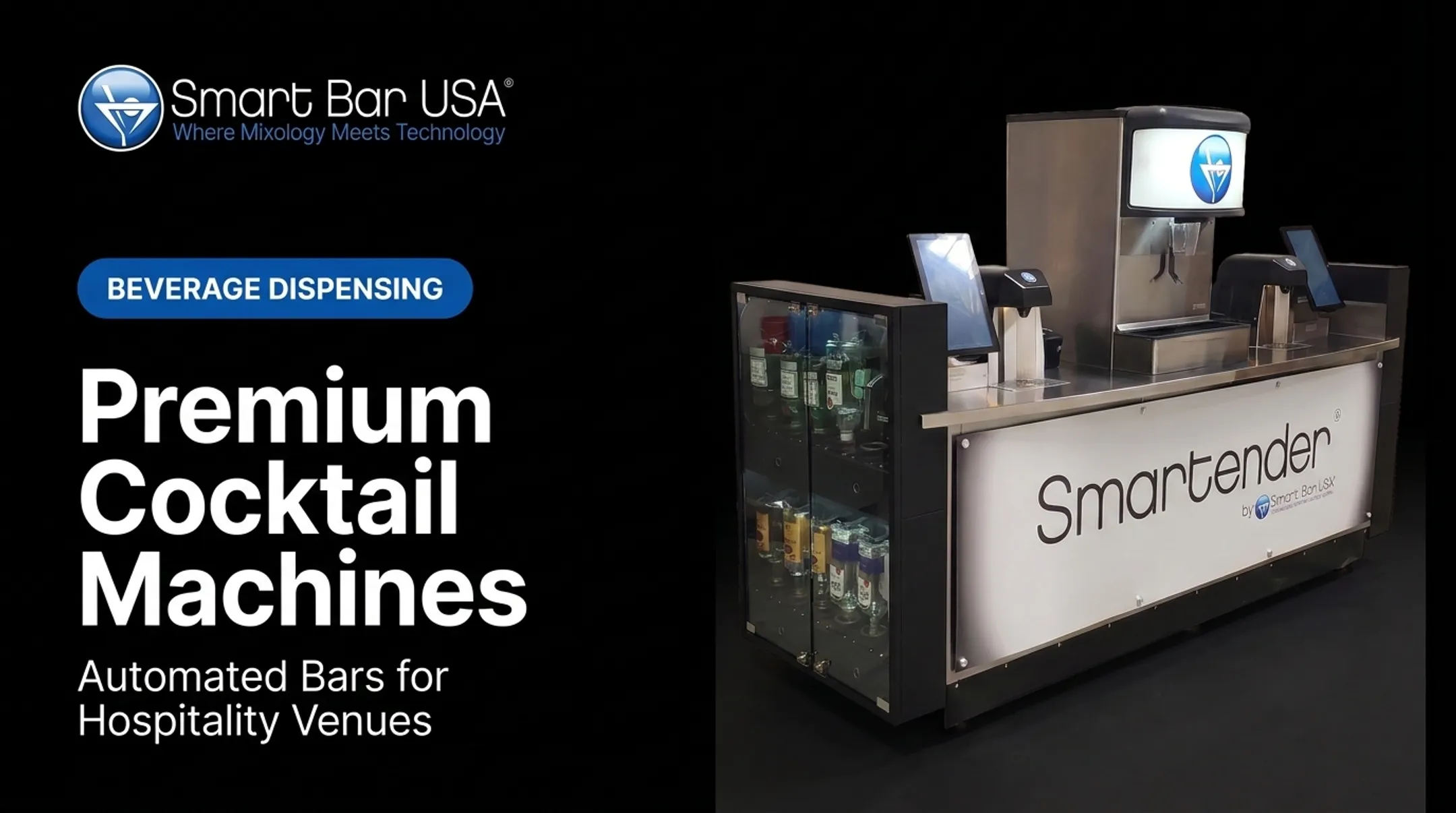
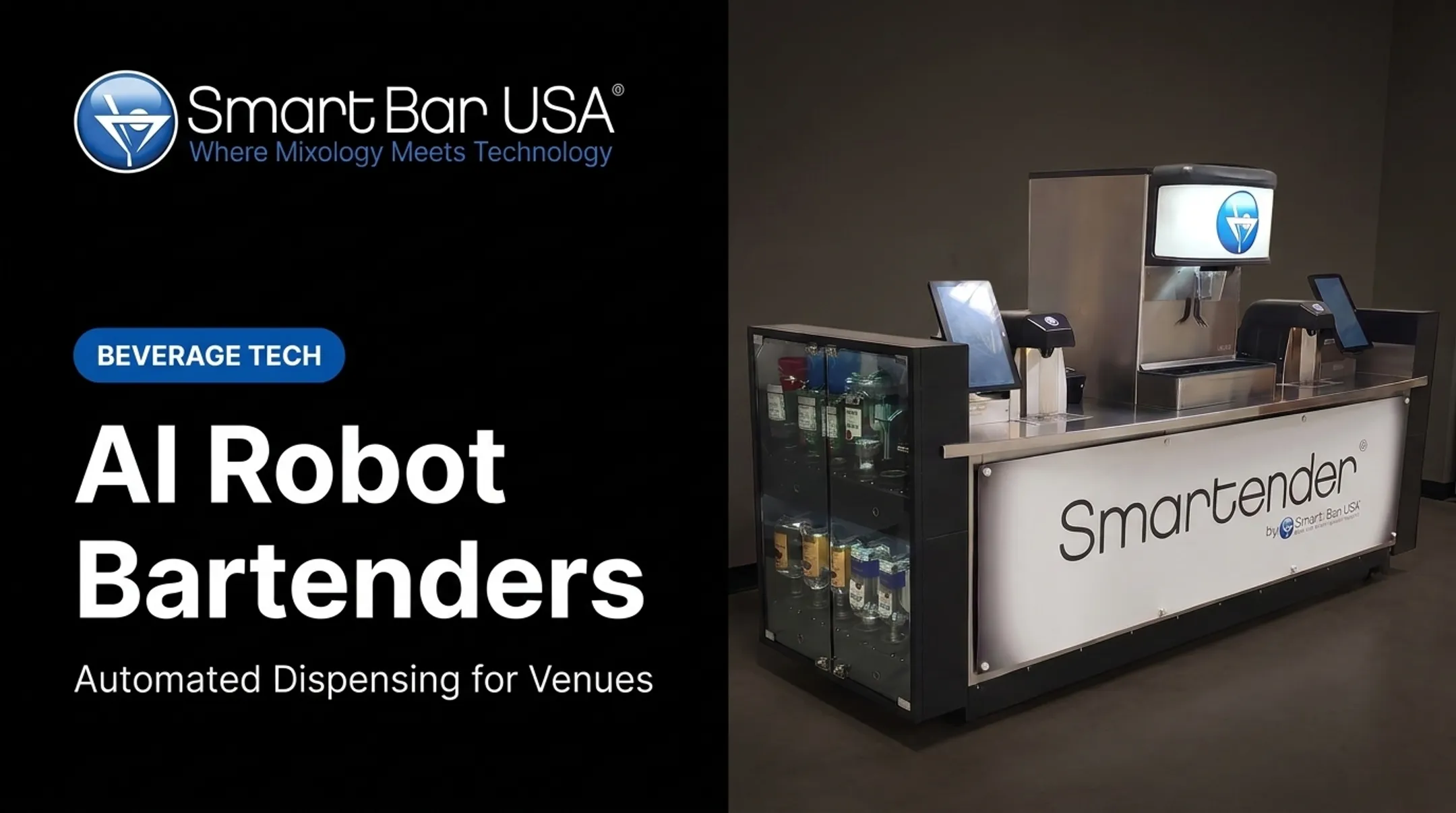
Professional cocktail makers draw spirits and mixers from dedicated reservoirs or supply lines. Smart Bar's Smartender A-Series systems, for instance, use an underbar-mounted valve box with dedicated tube inlets feeding each liquor line, keeping each ingredient on its own line through the pour.
Recipe Programming and Portion Control
Operators configure recipes and portion sizes through a touchscreen interface or connected software. This is where consistency gets built in:
- Pour times average around 4 seconds per drink on Smartender systems
- Dispensing accuracy is rated to within 1/16th of an ounce
- Drink-modifier recognition allows for menu variation without retraining staff
Precise, repeatable portions make drink costs easier to forecast. Bar & Restaurant's guidance on variance reporting notes that comparing units used against units sold is the baseline discipline for catching over-pours. Automation gives you cleaner data to run that comparison against.
Order-to-Serve Workflow
The exact process depends on the configuration:
- Bartender-operated: Staff selects the drink on the touchscreen; the machine pours; staff adds ice, garnish, and hands it off.
- Staff-assisted self-service: A guest orders via QR code, staff verifies age and authorization, then the guest or staff triggers the pour.
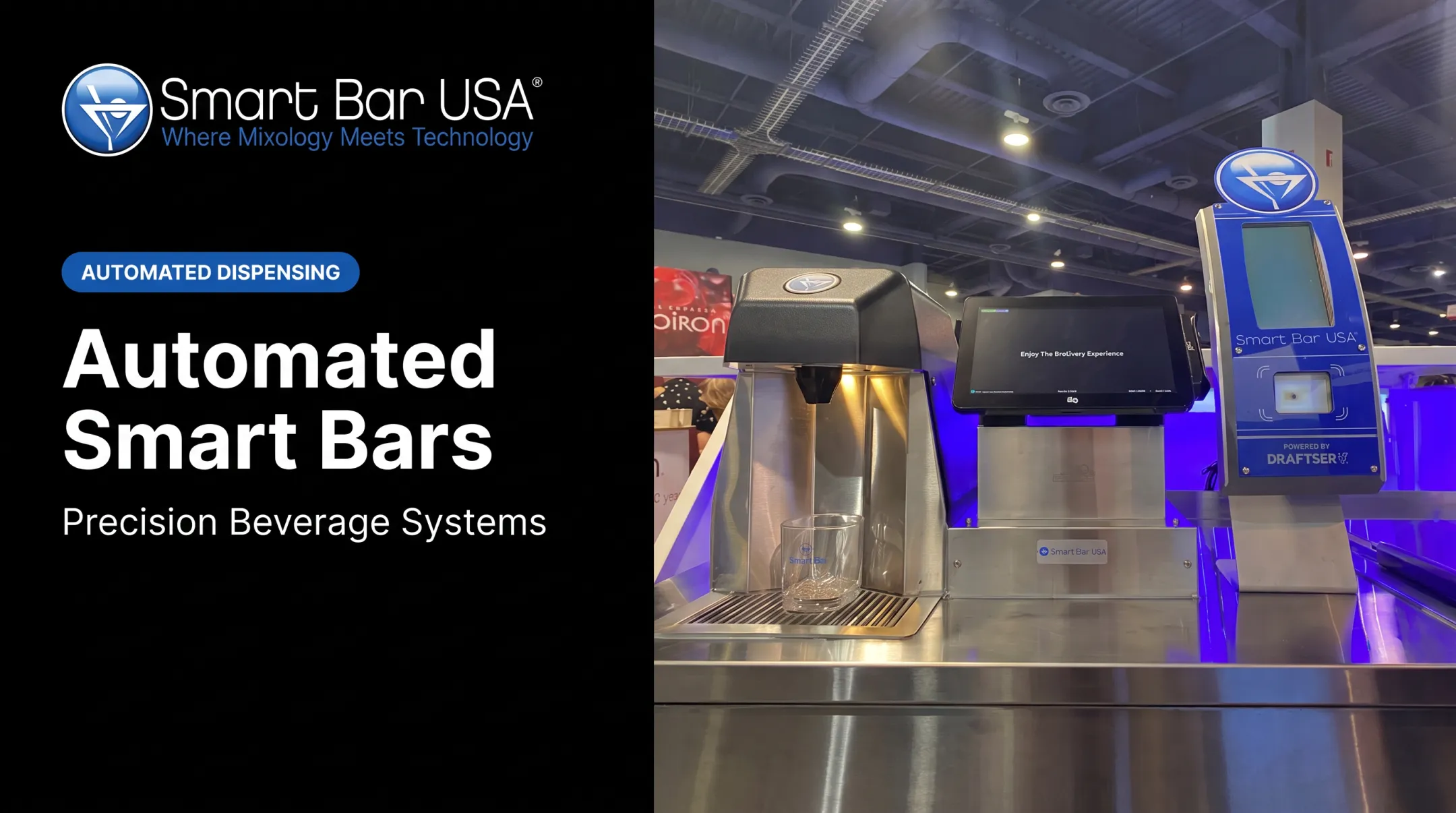
- Guest-facing self-service: Systems like Smartender Self Serve use QR or barcode scanning to retrieve a pre-authorized order before dispensing.

Self-service is not the same as unattended alcohol vending. Oversight, age verification, and responsible-service procedures still apply, and rules vary by state.
POS, Remote Ordering, and Multi-Unit Connectivity
Many professional systems integrate with POS platforms to connect orders, recipes, and reporting. Confirm compatibility for your specific POS and hardware before you assume the link will work out of the box.
Remote ordering and multi-unit connectivity matter most for hotels, casinos, and resorts running several bars off one management system.
Cleaning, Sanitation, and Maintenance
Any system handling alcohol and perishable ingredients needs a documented cleaning routine. The FDA Food Code 2022 requires beverage dispensing nozzles and lines to be cleaned at the manufacturer's specified frequency, or often enough to prevent soil and mold buildup.
Verify your specific manufacturer's cleaning guidance and check state alcohol-service rules. These vary and shouldn't be assumed.
Types of Professional Cocktail Makers and How to Choose One
Modular Countertop Systems
Modular systems install into existing bar counters and pair with established POS workflows. Smartender A-Series units are built for this setup. Pearl River Resort integrated a modular system with its existing InfoGenesis POS and pump room, then purchased six additional units after a successful 12-month trial.
This is the go-to option for restaurant chains, casino bars, and hotels with fixed service locations and consistent menus.
Portable and Self-Contained Systems for Events
Portable units support festivals, stadium concourses, pop-ups, and temporary bars where permanent infrastructure doesn't exist. Smartender GO, for example, houses its own water supply, filtration, ice bin, and waste management onboard — no plumbing hookup required. Practical requirements to check:
- Transport and setup time
- Power availability
- Ingredient storage capacity
- Staff access for a temporary footprint
Chilled, Self-Service, and Remote-Ordering Configurations
Chilled systems such as Smartender CHILL matter when your menu depends on fresh juices or perishable mixers. Self-service setups like Smartender DUO shift the workflow toward guest-triggered dispensing after an order is placed and authorized. Remote-ordering configurations add QR or mobile ordering so guests order from their seat while pours route to the nearest unit.
Before choosing self-service, assess:
- Supervision requirements
- Customer identification and age verification
- Portion limits
- Payment flow
- Spill control

Match System Capacity to Your Operation
Map your current drink-service process before buying anything. Focus on:
- Peak-period demand
- Number of service points
- Menu complexity
Buying based on advertised pour speed alone, without understanding your actual bottleneck, is a common and costly mistake.
Compare Technology, Service, and Total Cost of Ownership
Purchase price is only one line item. Build a comparison that includes:
- Installation and POS integration costs
- Software and licensing
- Cleaning supplies and maintenance
- Staff training
- Warranty terms and expected replacement cycle
Operator support and parts availability matter just as much as the hardware itself. A machine that's fast but slow to service during a busy weekend isn't actually saving you anything.
Business Benefits and Venue Applications
Speed and Peak-Period Throughput
Repeatable automated pours remove manual measuring so teams clear more tickets during rushes. Queue tolerance is thin: Oracle's survey of sports fans found 10 minutes was the maximum acceptable concession wait, and 59% said they'd spend more if wait times were cut in half.
Consistency and Portion Accuracy
Programmed recipes standardize taste and pour size across shifts, bartenders, and locations. After nearly a year of use, Playland Skate Center's owner reported consistent alcohol pours with no over- or miss-pours.
Reduce Waste, Shrinkage, and Unauthorized Dispensing
Tracked pours and controlled access flag over-pours and unrecorded drinks. Playland Skate Center also reported minimal waste and expense after almost a year running Smartender for alcoholic cocktails. Measure your own pour cost and variance before and after install so savings reflect your operation—not a generic percentage.
Reallocate Staff Toward Higher-Value Service
Automation frees trained staff for hospitality, complex cocktails, and guest recovery. You still need people for setup, replenishment, cleaning, and compliance oversight.
Applications Across Venue Types
| Venue Type | Operational Need |
|---|---|
| Casinos & gaming floors | High-throughput, consistent pours across the floor |
| Hotels & resorts | Consistency across multiple bars and pool areas |
| Restaurant groups | Recipe consistency across every location |
| Stadiums & arenas | Rapid service during short concession windows |
| Airports & lounges | Fast service for travelers, minimal bar staffing |
| Family entertainment centers | Adult beverage revenue without slowing operations |
| Those same throughput and consistency pressures show up in large multi-bar properties. Resorts World Las Vegas selected Smartender for its 88-acre property, including a 117,000-square-foot casino and pool areas, and uses Speed Pour to deliver four liquors and a mixer in under five seconds. |

Final Verdict: Are Professional Cocktail Makers Worth It?
Automated cocktail makers make the most sense for high-volume operators who need faster, more consistent service with tighter pour control. They're a weaker fit for small craft bars whose entire value proposition rests on bespoke hand mixing.
Smart Bar USA's Smartender product family covers the main commercial use cases:
- Modular systems for permanent countertop installation
- GO for portable, self-contained event service
- CHILL for refrigerated, perishable-ingredient service
- DUO/Self Serve for guest-facing dispensing
Systems support POS integration, remote management, and multi-unit reporting. Smartender's A-Series is ETL certified and manufactured at Smart Bar USA's Las Vegas facility.
Before requesting a system evaluation, document:
- Peak demand periods
- Menu complexity
- Staffing model
- Number of service points
- Existing inventory issues
That groundwork makes any vendor conversation far more productive.
Frequently Asked Questions
Which automatic cocktail maker is considered the best?
The best system depends on your venue's volume, menu complexity, service model, and POS integration needs. There's no universal winner — a portable event bar and a permanent casino installation call for different equipment entirely.
Are there robot cocktail makers available?
Yes. Automated dispensers with pumps and touchscreens fit high-volume commercial bars, while robotic-arm kiosks that shake and pour suit guest-facing novelty installations.
What is a professional cocktail maker called?
A human is a bartender or mixologist. The equipment is typically called a professional cocktail machine, automated cocktail dispenser, or automated bar system. "Robot bartender" is largely a marketing term.
How does a professional cocktail maker work?
It draws spirits and mixers from dedicated reservoirs or lines, then dispenses programmed recipe portions through a touchscreen or POS-triggered command. Staff or guests handle the final ice, garnish, and handoff.
What should a bar look for in a professional cocktail maker?
Look at liquor capacity, recipe flexibility, pour accuracy, cleaning requirements, and POS compatibility. Also weigh serviceability, inventory reporting, responsible-service controls, and total cost of ownership over the equipment's lifespan.