
"Beverage software" gets used as a catch-all term for all of it, which is part of the problem. The right platform depends entirely on what you're actually trying to fix: production visibility, distribution logistics, service speed, or compliance risk.
The National Restaurant Association's 2024 Technology Landscape Report found operators planning to invest 52% in inventory control and management, 48% in POS, and 37% in automated labor scheduling — three separate technology categories, not one universal system. The report makes clear that beverage operations run on stacks, not single silver-bullet tools.
Below, we compare five 2026 options by what job each one actually does, not as interchangeable competitors.
Key Takeaways
- Beverage software splits into service automation, manufacturing ERP, distribution, and compliance. Match the category to your bottleneck first.
- Smartender leads for high-volume beverage-service automation; it isn't an ERP or distribution replacement.
- Rank recipe control, traceability, integrations, and mobile access ahead of price.
- Confirm 2026 pricing and implementation terms with vendors; feature lists alone don't tell the full story.
Overview of Beverage Software in the U.S. Market
Beverage software covers digital platforms managing production, inventory, distribution, sales, service, quality, and reporting. What a manufacturer needs looks nothing like what a nightclub needs.
Manufacturers require:
- Recipe and formula management
- Production planning and batch tracking
- Lot traceability for recalls
Distributors require:
- Route planning and order management
- Warehouse and customer account visibility
- Field-sales tools
High-volume venues require:
- Fast, consistent pour service
- POS connectivity
- Waste and shrinkage control
A February 2025 Nation's Restaurant News article citing NRA's 2025 State of the Industry report found 83% of operators view technology as a competitive advantage, yet only 28% said their tech investment directly improved profitability.
Among operators who increased tech spending over the prior two to three years, 69% reported gains in efficiency. That gap between adoption and results usually traces back to mismatched software: buying a platform that doesn't fit the actual bottleneck.
The four categories below map to different problems: automated service, manufacturing ERP, distribution, and compliance.
Best Beverage Software for U.S. Businesses in 2026
We evaluated each platform on category fit, beverage-specific functionality, integration capability, scalability, usability, and total cost of ownership. Each platform answers a different operational question—not a single head-to-head race.
Smart Bar USA Smartender
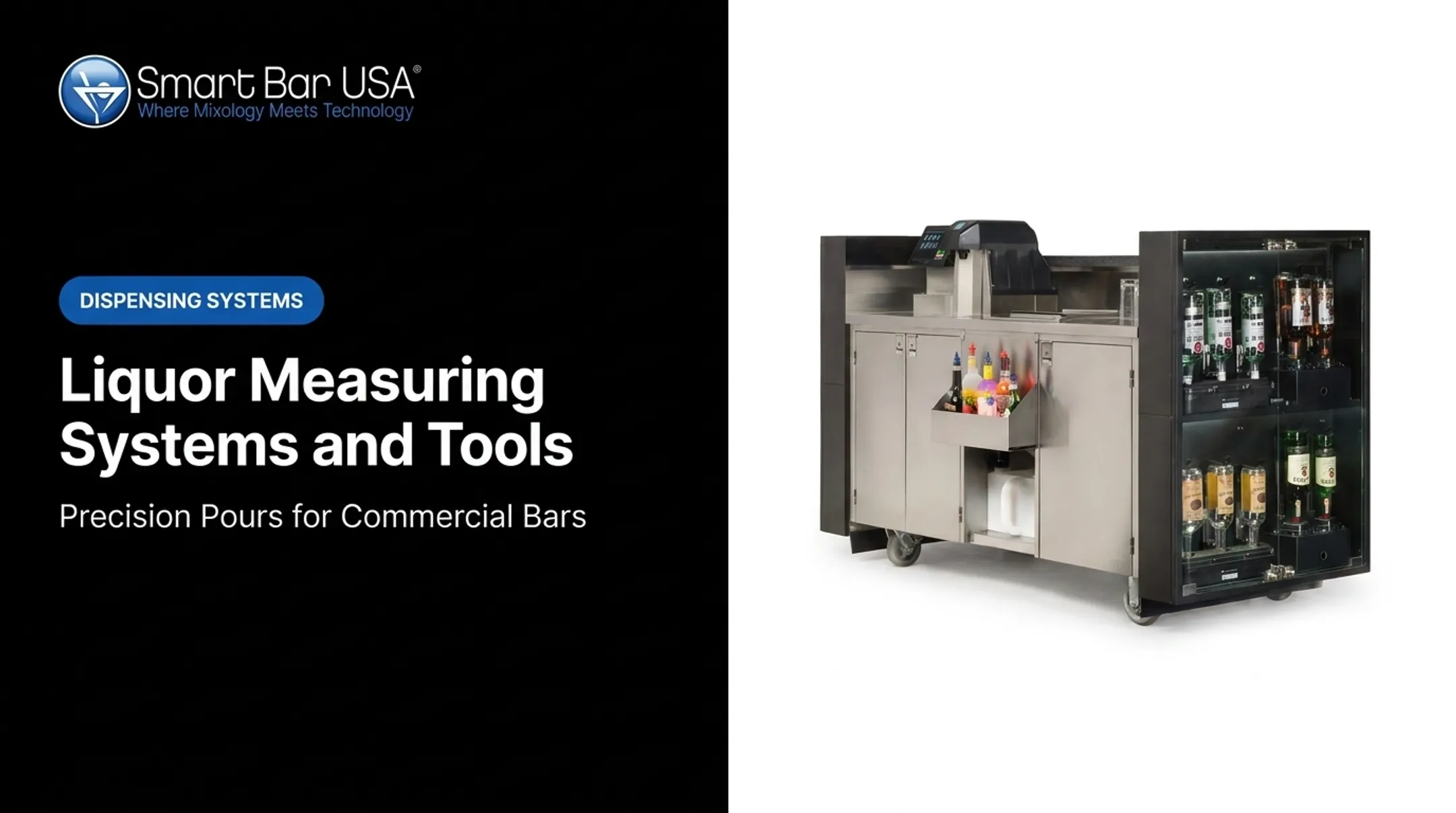
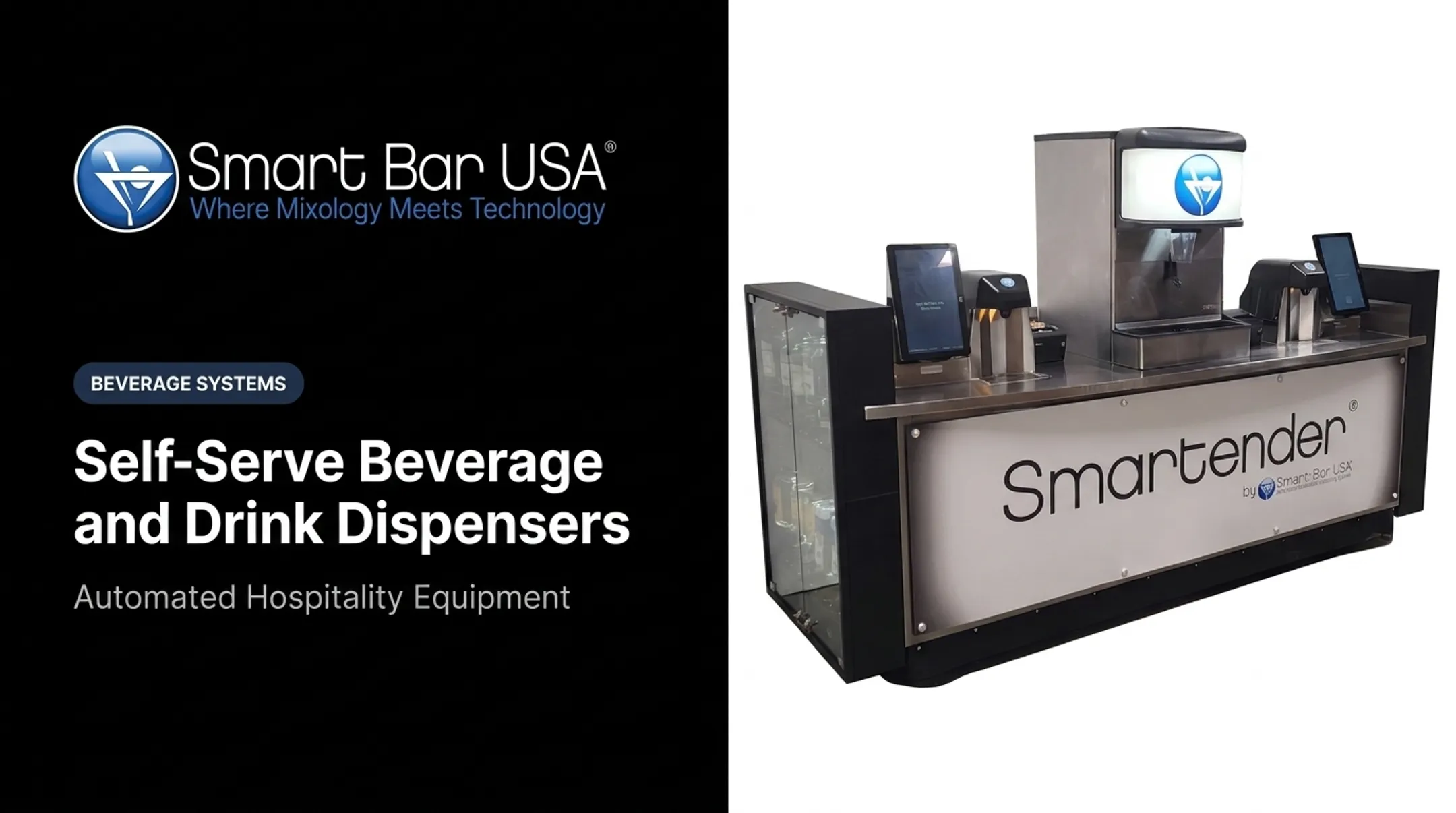
Smartender is a beverage-service automation system built for high-volume venues: casinos, hotels, nightclubs, stadiums, airports, and entertainment complexes. Smart Bar USA has manufactured these systems in Las Vegas since 2012, and its A-Series, GO, CHILL, and DUO product lines now hold patents across North America and 32 additional countries.
The system pairs hardware with Smartender Intelligent Software, which handles remote multi-unit management, real-time analytics, POS integration, and bottle-empty notifications.
At 888 Japanese Steakhouse in Las Vegas, a Smartender A1800 installed in 2021 generated over $184,000 in total financial impact and a 362% ROI over 3.6 years, according to Smart Bar's own case study data.
Comparison snapshot:
| Criterion | Details |
|---|---|
| Best for | High-volume venues needing faster, consistent, controlled cocktail dispensing |
| Core capabilities | Automated dispensing, pour tracking, POS connectivity, remote ordering, multi-unit software management |
| Deployment | Quote-based pricing; models include A800, A1800, A3400, A5000 (8–50 liquor capacity), plus GO, CHILL, and DUO configurations |
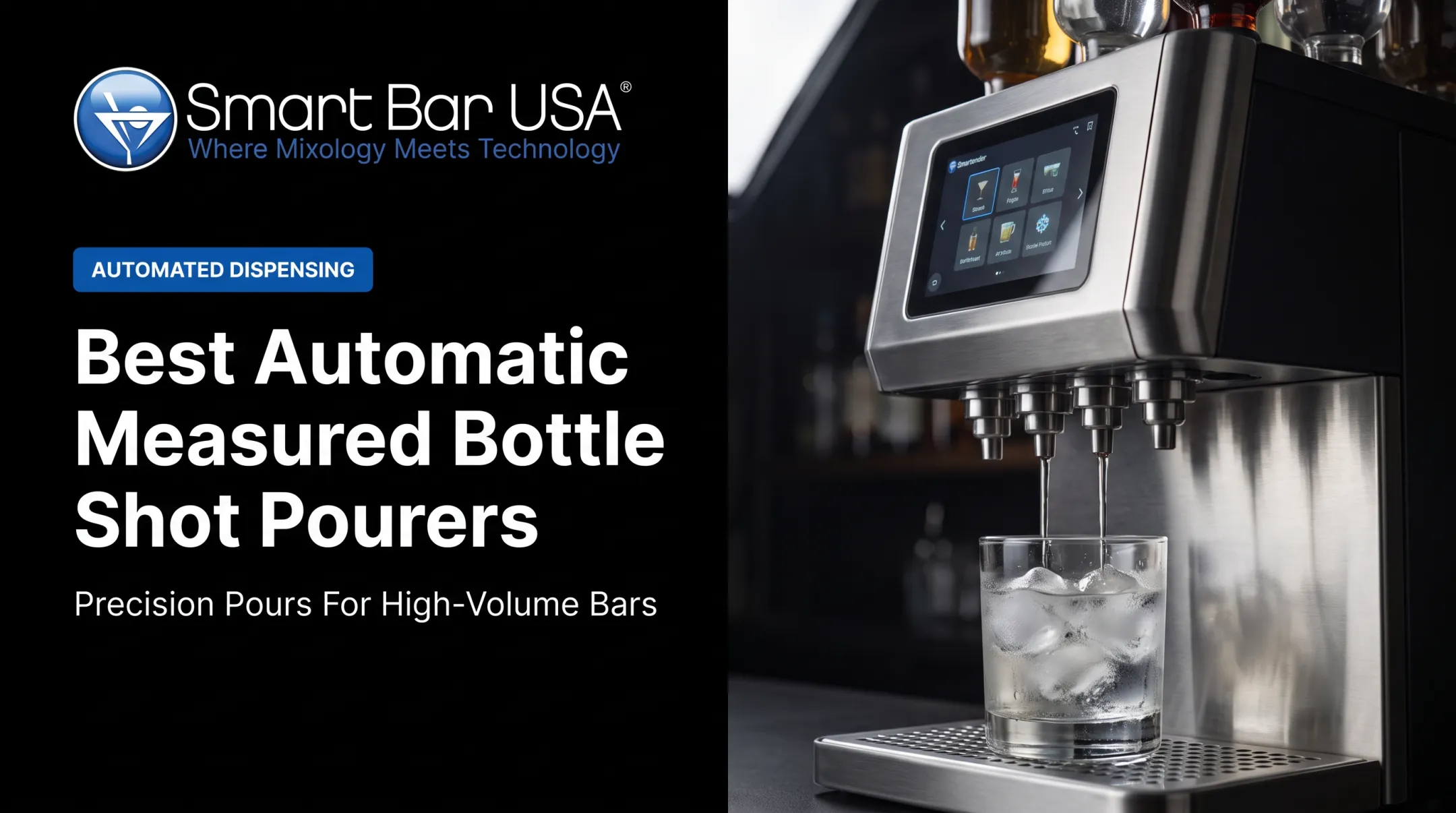
Smartender A-Series units pour in under 4 seconds with accuracy to 1/16 ounce, per company product documentation. MGM National Harbor deployed 10 Smartender 3400 units connected to a centralized pump room. At Rock & Brews Casino Braman, the general manager credited the system's speed with letting servers handle more drink orders per shift.

This isn't a manufacturing ERP or distribution platform. It solves service speed and consistency, not production planning or route logistics.
Wherefour
Wherefour is a cloud-based ERP built for small and midsize food and beverage manufacturers needing one system for purchasing, production, inventory, and accounting.
Its manufacturing module lets users manage formulas and production instructions, add labor and equipment overhead to batches, and choose FIFO, FEFO, LIFO, or user-selected lot rotation. For compliance, Wherefour's manufacturing platform documents start-to-finish traceability with one-click reports and bidirectional trace and recall reports showing customer, product, and lot-code relationships.

Comparison snapshot:
| Criterion | Details |
|---|---|
| Best for | Growing beverage manufacturers needing industry-specific ERP without enterprise complexity |
| Core capabilities | Recipe/formula control, batch production, traceability, MRP, QuickBooks/Sage Intacct/Xero integrations |
| Deployment | Custom pricing, no published price list; monthly, quarterly, or annual billing per Wherefour's pricing page |
Capterra shows Wherefour at 4.7/5 across 63 reviews as of August 2026. Integrations extend via API/Zapier to over 5,000 systems, plus native connections to QuickBooks, Sage Intacct, Microsoft Dynamics, and Xero.
Aptean Food & Beverage ERP
Aptean targets manufacturers and distributors managing production, warehouse operations, quality, and regulatory requirements at greater scale than Wherefour typically serves.
The platform provides lot tracing, ingredient-level tracking, and bidirectional allergen management. It also automatically calculates and tracks catch-weight values through invoicing at lot and item level, which matters for beverage producers dealing with variable-weight products.
Comparison snapshot:
| Criterion | Details |
|---|---|
| Best for | Manufacturers or distributors needing broader ERP functionality and multi-site control |
| Core capabilities | Production scheduling, warehouse management, catch-weight support, multi-site inventory visibility |
| Deployment | Cloud-native, built on Microsoft Business Central with Azure-cloud security; request-a-demo pricing only |
The Enterprise Edition supports multi-site production and global supply chains on one platform. Because it's built on Microsoft Business Central, expect Microsoft-ecosystem dependencies. Weigh that carefully if your team already runs on a different stack.
SimplyDepo
SimplyDepo is a distribution and field-operations platform, not a manufacturing ERP. It's built for distributors, beverage brands, sales reps, and direct-store-delivery teams.
Reps can write orders at the shelf online or offline, with automatic synchronization once connectivity returns. The mobile app also captures photos, audit answers, and shelf checks in the same visit — combining retail execution with order-taking.

Comparison snapshot:
| Criterion | Details |
|---|---|
| Best for | Distributors and brands coordinating field sales, routes, and delivery execution |
| Core capabilities | Mobile order entry, route planning, proof-of-delivery (GPS/signature/photo), white-label B2B storefronts |
| Deployment | Starts at $69/rep/month billed annually or $89/rep/month billed monthly |
SimplyDepo integrates directly with QuickBooks for order, invoice, and payment sync. Capterra reviews show a 5.0/5 rating across 19 reviews. If your business needs batch production tracking, you'll need to pair this with a manufacturing system — SimplyDepo doesn't touch that layer.
GoAudits
GoAudits handles inspections, quality checks, and compliance across beverage and food operations — kitchens, warehouses, production floors, or multiple retail locations.
It runs mobile inspections offline on Android and iOS, with customizable checklist templates. When an inspection fails, the platform assigns corrective actions with reminders and escalations, then tracks sign-off.
Comparison snapshot:
| Criterion | Details |
|---|---|
| Best for | Businesses needing consistent food safety and audit readiness across locations |
| Core capabilities | Digital checklists, photo/signature evidence capture, corrective-action workflows, multi-site dashboards |
| Deployment | Starter at $10/user/month; Enterprise at $30/user/month; 14-day free trial |
GoAudits complements an ERP or POS system rather than replacing one — it's the compliance layer, not the production or sales layer. G2 reviewers rate it 4.6/5 (16 reviews); Capterra shows 4.8/5 across 145 reviews.

How We Chose the Best Beverage Software
We classified each platform by its primary job: service automation, manufacturing ERP, distribution, or inspections. Then we evaluated within that context rather than forcing feature-for-feature comparisons across unrelated categories.
What we looked at:
- Beverage-specific functionality: recipe control, batch traceability, pour accuracy, compliance documentation
- Integration risk: POS, accounting, ERP, and API connections, plus data migration and hardware needs
- Usability and scale: mobile/offline access, multi-location support, role-based permissions
- Independent evidence: verified Capterra and G2 ratings rather than vendor-supplied testimonials alone
Common mistakes we avoided:
- Comparing a service-automation tool against a full ERP as if they solve the same problem
- Trusting feature checklists without confirming current documentation
- Ignoring total cost of ownership in favor of headline pricing
- Skipping real workflow testing before signing a contract
Before you commit to anything, verify 2026 pricing, trial terms, implementation fees, and contract length directly with the vendor. Marketing pages age fast; quotes don't.
Conclusion
There's no single best beverage software for 2026. There's only the best fit for your bottleneck. Smartender handles automated high-volume service. Wherefour and Aptean cover manufacturing and traceability. SimplyDepo covers distribution logistics. GoAudits covers compliance and audit consistency.
Start by mapping your workflow and finding where cost actually sits:
- Production waste
- Missed deliveries
- Service delays
- Failed inspections
Then confirm integration needs and compare full implementation costs—not just the subscription price.
If your bottleneck is service speed, pour consistency, or beverage waste in a high-volume venue, evaluate Smartender's automated dispensing, POS integration, and inventory tracking. It won't replace your ERP or distribution stack. For the bar, it solves the problem those systems don't touch.
Frequently Asked Questions
What is the best software for managing food and beverage inventory?
It depends on where inventory sits: manufacturing, warehouse, kitchen, or pour tracking. Match the platform to that inventory type before you choose.
What is the best ERP system for food and beverage manufacturers?
The right ERP depends on company size, production complexity, traceability needs, and budget. Smaller producers often fit platforms like Wherefour, while larger multi-site operations may need Aptean.
What software do most restaurants use?
Most restaurants combine separate tools for POS, payment processing, inventory, scheduling, and accounting rather than one all-in-one platform. Prioritize how well these systems integrate with each other over any single "best" option.
What features should I look for in beverage software?
Prioritize inventory visibility, recipe or formula management, traceability, and POS or ERP integrations. Add compliance workflows, mobile access, and scalability based on whether you manage production, distribution, or service.
Can beverage software integrate with POS and inventory systems?
Integration capability varies by product and use case. Check for prebuilt connectors, API access, and how order or pour data syncs with your existing inventory records before signing a contract.
How much does beverage software cost?
Pricing varies widely by users, locations, modules, and implementation needs. SimplyDepo starts around $69/rep/month and GoAudits starts at $10/user/month, while ERP platforms like Wherefour and Aptean use custom, quote-based pricing.