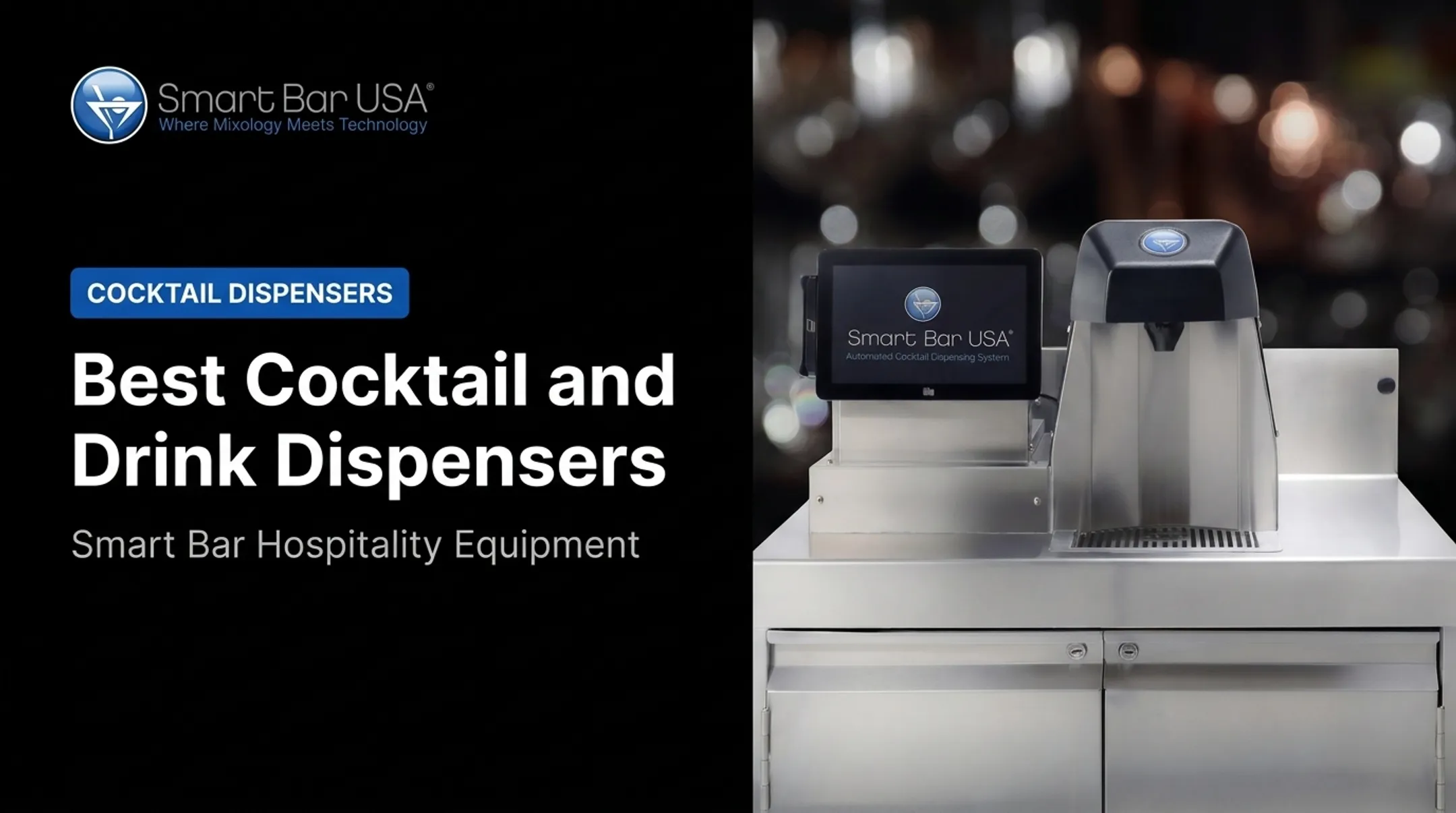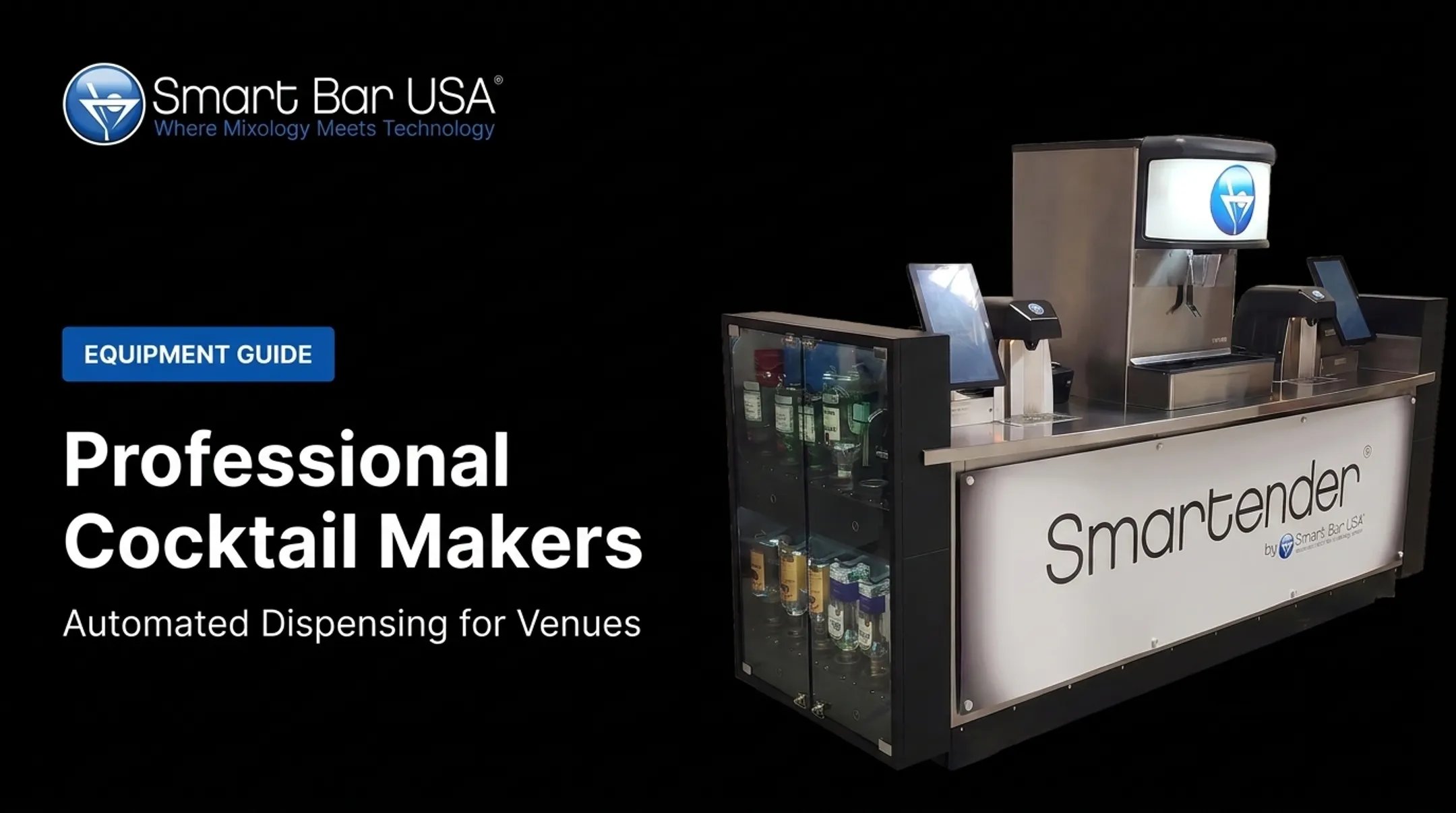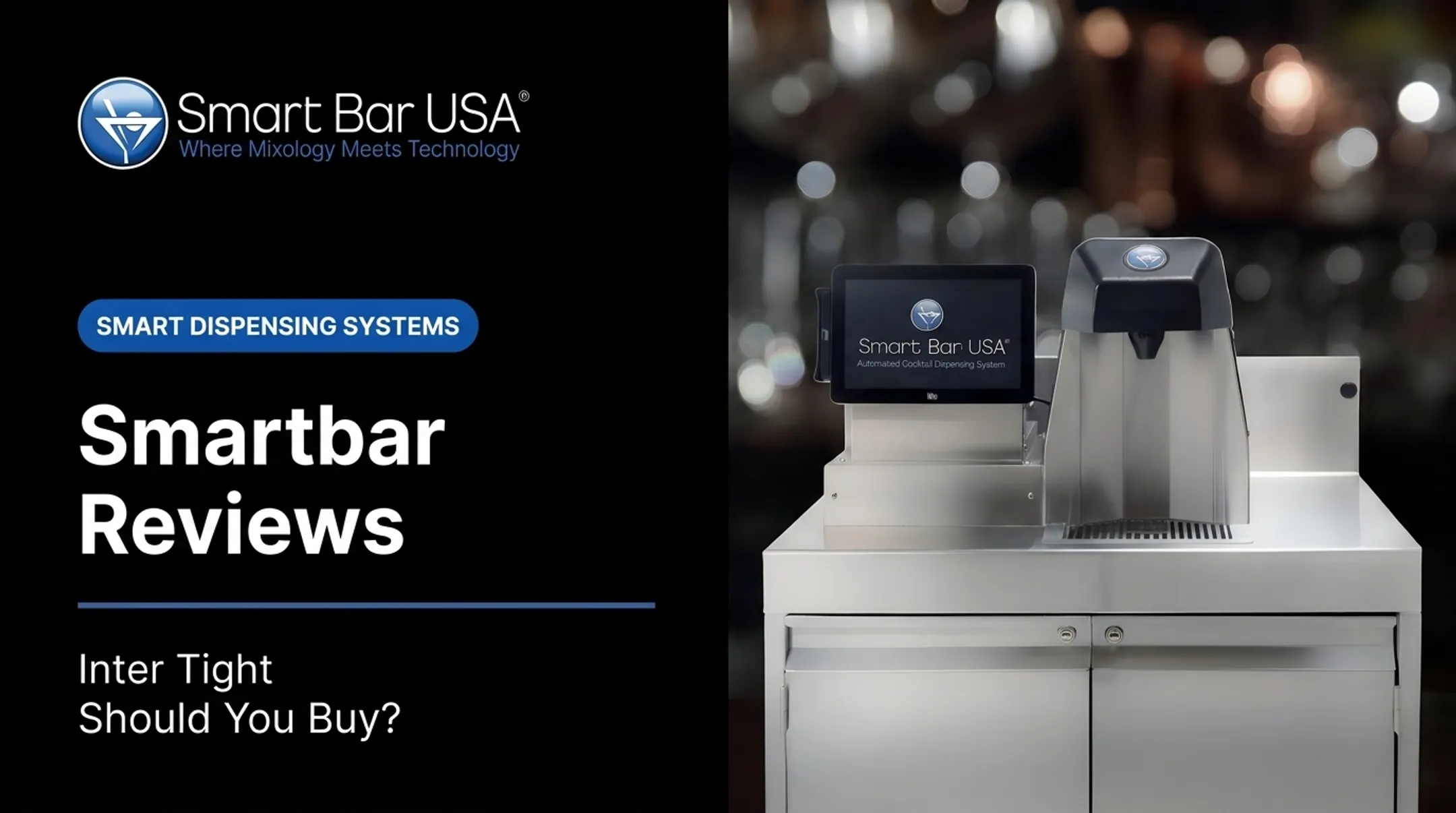

Bars, casinos, hotels, stadiums, and airports all face the same core problems. Peak-period demand overwhelms staff. Pours vary shift to shift. Staffing is tight and getting tighter—the National Restaurant Association found 77% of operators cite recruiting and retention as a significant challenge, with 59% reporting hard-to-fill openings in 2024, according to the NRA's 2025 Workforce Technology report.
This guide walks through what separates a premium system from a basic drink maker, where these machines create real value, and how to choose one for your venue.
Key Takeaways
- Premium is defined by pour speed, recipe precision, and operational control
- Choose by menu complexity, peak throughput, footprint, and staffing model
- Compare total cost of ownership, not just sticker price
- Request live demos, integration specs, and venue references before buying
What Counts as a Premium Cocktail Machine?
A cocktail machine is an automated system that dispenses or combines spirits, mixers, and other components according to programmed recipes. That's different from a blender, a frozen drink machine, a manual jigger-and-shaker setup, or a home capsule appliance.
Commercial buyers typically encounter several categories:
- Capsule-based home machines — single-serve, consumer-grade, not built for volume
- Commercial countertop dispensers — staff-operated, integrate with existing bar setups
- Portable automated bars — self-contained units for temporary or mobile service
- Chilled systems — built-in refrigeration for perishable mixers and juices
- Self-service units — guest-facing dispensing with access controls
"Premium" shouldn't just mean a high price tag or a polished shell. It should reflect:
- Reliability under peak volume
- Recipe accuracy and dispensing precision
- Throughput when the bar is slammed
- Integration with existing bar and POS setups
- Sanitation design and access security
- Vendor support after install
A machine that looks expensive but can't hold a consistent pour under Friday-night volume is a liability.
What Features Separate Premium Systems from Basic Drink Makers?
Speed and Throughput
Pour speed directly affects queue length, peak-period service, and revenue capture. At TIAA Bank Field, an automated setup reportedly delivered 14 drinks per minute across four stations with one worker. Traditional bars at the same venue averaged 9–12 minute waits.
Smartender systems average roughly 4 seconds per pour through simultaneous liquor-and-mixer dispensing. At Atomic Golf, four Smartender units reportedly support up to 1,440 drinks per hour. Over a two-hour guest window, that capacity reaches 2,880 drinks—an estimated $34,560–$46,080 in beverage value.

Precision and Recipe Consistency
Controlled portioning standardizes cocktails across shifts, staff, and locations. Before automating, one operator (888 Japanese BBQ owner Patrick Jung) spent nearly two weeks manually testing and calibrating recipes to get consistency right. That labor cost hides behind "just pour it the same way every time."
Over-pouring, spillage, and unrecorded comps add up. Industry guidance suggests eliminating these variances can reduce liquor cost by roughly 6%, pushing toward a 16% or lower target liquor cost of goods.
POS, Inventory, and Management Integration
A premium system should connect to your existing operation, not force you to rebuild it. Look for:
- Recipe and PLU mapping tied to POS transactions
- Real-time inventory depletion tracking
- Bottle-empty notifications
- Multi-unit remote management and analytics
- Alcohol-service scheduling by date and time
Smartender integrates with Epson OmniLink POS, major Bag-in-Box delivery systems, and platforms like GoTab and QSR Automations' ConnectSmart Kitchen. Pearl River Resort connected Smartender Modular to its InfoGenesis POS and Berg pump room. After a 12-month trial, the resort bought six more units.

Configuration Flexibility
Not every venue needs the same footprint. Consider:
- Liquor-channel capacity: 8, 18, 34, or 50 distinct spirits
- Chilled vs. non-chilled options for perishable juices and fresh mixers
- Portable units for pop-ups, or permanent units for back-of-house
- Self-service modes with guest drink limits and cooldowns
Commercial Construction, Certifications, and Support
Ask about materials, cleaning access, warranty terms, training, and replacement parts before you buy. Smart Bar USA's Smartender A-Series and CHILL units carry ETL Electrical and Sanitation certification. Verify the specific listing and standard with any vendor—certification alone is not proof of local health-code compliance.
Where Premium Cocktail Machines Create the Most Value
Nightclubs, Bars, and Casino Gaming Floors
Rush-period service is where automation earns its keep. MGM National Harbor deployed 10 Smartender A3400 units across high-traffic casino bars, while Hard Rock Casino Rockford runs 9 A5000 units across a 24/7 floor. MGM reports the systems reduce the need for fully staffed bars during peak periods, even as union-mandated wages rise.

Hotels, Resorts, and Multi-Location Groups
Standardized recipes and centralized controls matter when you're running pool bars, lounges, and event spaces across one property, or several. Resorts World Las Vegas selected Smartender for its 88-acre property, including a 117,000-square-foot casino floor and pool areas, citing a short payback window.
Stadiums, Festivals, Conventions, and Large Events
Portable and self-service systems fit venues where crowds arrive in waves and bar footprints are temporary. Halftime surges, short selling windows, and long lines are common pain points at stadiums and arenas. Portable units like Smartender GO can roll into place and start serving in seconds without a full pop-up bar build-out.
Airports, Lounges, Cruise, and Family Entertainment
Constrained footprints and thin staffing define these venues. Airport lounges need dependable, fast service for high traveler volume. Cruise beverage stations face the same space and crew limits at sea. Family entertainment centers like Playland Skate Center and Wheels and Thrills use automated dispensing for low-maintenance alcohol service without a dedicated bartending team.
Revenue and ROI Considerations
Build your own model rather than trusting a generic percentage:
Annual net benefit = labor savings + recovered product margin + incremental revenue from added capacity − consumables, service, and financing costs
For context: at an average $8 cocktail, selling just 10 extra drinks a day adds roughly $25,000 a year. Selling 20-30 extra drinks daily can generate $50,000–$85,000 annually, depending on operating days. Use the NRA's 2024 cost benchmarks (32.0%–32.4% food/beverage cost ratios) as a comparison point, not a promised outcome.

How to Choose the Right Premium Cocktail Machine
Start With Your Service Model
Document your expected drink volume, busiest periods, menu size, and number of service points. Ask yourself:
- Will this be permanent, mobile, or shared between locations?
- Do guests need self-service, or will staff operate it?
- How many bartenders do you have during peak hours?
Match the Machine to Your Beverage Program
Check whether the system handles your best-selling drinks, including fresh or perishable ingredients, carbonation, and mocktail options.
A chilled unit like Smartender CHILL fits menus built on fresh juice. A non-chilled Smartender A-Series modular unit is often enough for spirit-forward cocktails.
Check Site and Installation Requirements
Confirm footprint, power (most Smartender units run on standard 120 VAC, 20 Amp outlets), water and soda line access, and clearance for staff or guest use.
Portable units like Smartender GO carry their own water, ice, and CO2, which helps where plumbing isn't available.
Evaluate Controls, Security, and Compliance
Ask vendors directly:
- Who can access liquor channels, and how are permissions managed?
- How are pours recorded for auditing?
- Can service be scheduled by date and time to enforce alcohol-service hours?
- What sanitation certifications apply (such as NSF or ETL), and can you provide the listing number?
Note: automated dispensing systems don't replace your legal responsibility for age verification. Age checks stay the establishment's responsibility.
Compare Total Cost and Vendor Support
Factor in installation, training, software, consumables, cleaning supplies, servicing, and warranty—not only the sticker price. Before you buy, request:
- A live demonstration with your actual drink menu
- References from comparable venues
- A written deployment plan
Smartender Solutions for Commercial Beverage Operations
Smart Bar USA, founded in 2012 and headquartered in Las Vegas, manufactures the Smartender family of patented automated dispensing systems. Patents cover North America and 32 additional countries. The company launched with Smartender Portable and expanded in 2015 with Smartender Modular.
The Smartender lineup covers several commercial setups:
- Smartender Modular: permanent countertop installation for existing bar and POS environments, available in 8-, 18-, 34-, and 50-liquor capacities
- Smartender GO: fully self-contained portable bar with onboard water, ice, CO2, and waste handling, built for mobile or temporary service
- Smartender DUO: controlled self-service dispensing with drink limits, cooldowns, and QR-code ordering
- Smartender CHILL: refrigerated unit for perishable mixers and fresh juice, running on a standard US outlet

Every configuration runs on Smartender Intelligent Software for multi-unit management, custom cocktail programming, and real-time analytics.
Operators can request a venue-specific setup based on volume, menu, footprint, and staffing needs by scheduling a demo with Smart Bar USA.
Frequently Asked Questions
What is the best cocktail machine for a bar?
The best bar machine depends on liquor capacity, cocktail variety, footprint, peak throughput, and cleaning habits. Commercial operators need equipment built for volume, POS integration, and auditable pours—not consumer capsule gadgets.
How much does a cocktail maker machine cost?
Commercial systems vary widely by liquor capacity, chilled options, and installation needs, and most manufacturers price by quote rather than list price. Separate equipment cost from total ownership cost, including training, installation, and service.
What is a premium cocktail machine?
A premium cocktail machine is an automated dispensing system with commercial-grade construction, controlled recipes, accurate portioning, fast throughput, POS integration, sanitation-focused design, and scalable vendor support.
Are cocktail machines worth it for a bar or restaurant?
It depends on your drink volume, staffing constraints, peak-period demand, and menu consistency needs. High-volume venues with tight labor and recipe-variance problems tend to see the clearest value.
How do you clean a commercial cocktail machine?
Cleaning varies by design but typically involves scheduled line flushing, sanitizing beverage-contact surfaces, washing removable parts, and following the manufacturer's documented cleaning schedule and local health code requirements.