
Accurate liquor measurement affects far more than taste consistency. It shapes pour cost, inventory accuracy, and how fast your team can serve a packed house. This guide covers manual tools like jiggers and measured pourers, then moves into automated dispensing systems built for repeatable, high-volume service, plus how to choose between them.
Key Takeaways
- Check jigger fill lines every time—capacities vary, so don’t assume a standard size
- Measured pourers and calibrated tools beat free pouring on portion control and consistency
- Evaluate automated dispensers by volume, recipe needs, integration, and staff workflow
- Run hybrid setups: manual tools at slower stations, automation where volume peaks
What Are Liquor Measuring Systems?
A liquor measuring system is the full combination of hardware, controls, recipes, dispensing methods, and sometimes software used to deliver a consistent pour every time. That's different from a single-purpose tool like a jigger, which measures one shot at a time with no memory of what happened before it.
Three broad categories cover most bars:
- Manual tools — jiggers, graduated measures, shot glasses for low-volume or craft service
- Controlled bottle-pour systems — measured pourers that dispense a fixed portion per bottle
- Automated beverage dispensers — integrated systems handling multiple spirits, recipes, and reporting
Measurement accuracy drives pour-cost management, waste reduction, and shrinkage monitoring—not only drink quality.
Provi's beverage cost framework calculates cost as beverage cost divided by beverage sales, treating theft, breakage, and spillage as variance that eats into margin. Provi's guide to bar and beverage costs is worth reading if you've never mapped your own variance.
Three controls work together:
- Portion device — jigger, pourer, or dispenser that sets the volume
- Process control — recipe cards and training that standardize how staff pour
- Inventory control — comparing theoretical usage to actual usage
Automation can combine all three, but buying a dispenser doesn't automatically prove every ounce of loss was overpouring.
Traditional Liquor Measuring Tools
Jigger
A jigger is a small, hourglass-shaped measuring vessel used to portion spirits into a mixing glass or shaker. It remains the standard alcohol measuring device because it's cheap, portable, and requires no power source.
Jiggers aren't one-size-fits-all:
- Double-sided designs: two cups joined at the base, commonly 1.5 oz and 0.75 oz in the US
- Japanese-style models: tall and narrow with graduated interior marks for partial pours
- Stepped models: internal rings marking multiple measurements in one vessel
- Bell-shaped models: rounded cups for faster visual fills

Correct workflow: Pick the measurement your recipe calls for, hold the jigger steady, fill to the line without topping it, then transfer close to the mixing vessel to avoid spilling on the bar top.
Measured and Free-Flow Bottle Pourers
Measured pourers dispense a set quantity automatically, commonly in 0.5, 0.75, 1, or 1.5 oz increments, according to Spill Stop's comparison of pourer types. Free-flow speed pourers move liquid faster but still rely on the bartender's timing to control volume.
Before trusting any pourer:
- Match the pourer to the bottle neck — a loose fit changes flow rate
- Check seals regularly; a cracked pourer leaks or clogs
- Clean pourers on a schedule, not just when they look dirty
- Test output periodically rather than assuming calibration held
Graduated Cups, Shot Glasses, and Other Manual Measures
Graduated measuring cups, bar spoons, and shot glasses work well for home bars, recipe testing, or low-volume service where speed isn't critical. They're also useful for small quantity ingredients like bitters or syrups.
These tools slow down commercial service. When forty guests order the same margarita during a rush, reaching for a graduated cup every time creates a bottleneck a jigger or pourer wouldn't.
Free Pouring and Manual Calibration
Free pouring means using a timed count instead of measuring volume. It's fast, but it's a technique, not a verified measurement method. The European Bartender School's comparison of free pouring versus jiggering notes that free pouring supports handling multiple simultaneous orders, but requires real training to stay consistent.
A 2005 study of 86 bartenders found that glass shape alone changed pour volume by over 20%, even among experienced staff. That gap shows how technique drifts without a fixed reference point. Before relying on free pouring commercially, practice with water against a known measure and document your standard recipes.
Tool-Selection Comparison
| Tool | Accuracy | Speed | Training Needed | Best For |
|---|---|---|---|---|
| Jigger | High | Moderate | Low | Craft cocktails, low-to-mid volume |
| Measured pourer | High | Fast | Low | Simple mixed drinks, consistent recipes |
| Free-flow pourer | Variable | Fast | High | Experienced staff, high-speed service |
| Graduated measure | High | Slow | Low | Recipe testing, home bars |
Automated Liquor Dispensing Systems
How Automated Dispensing Works
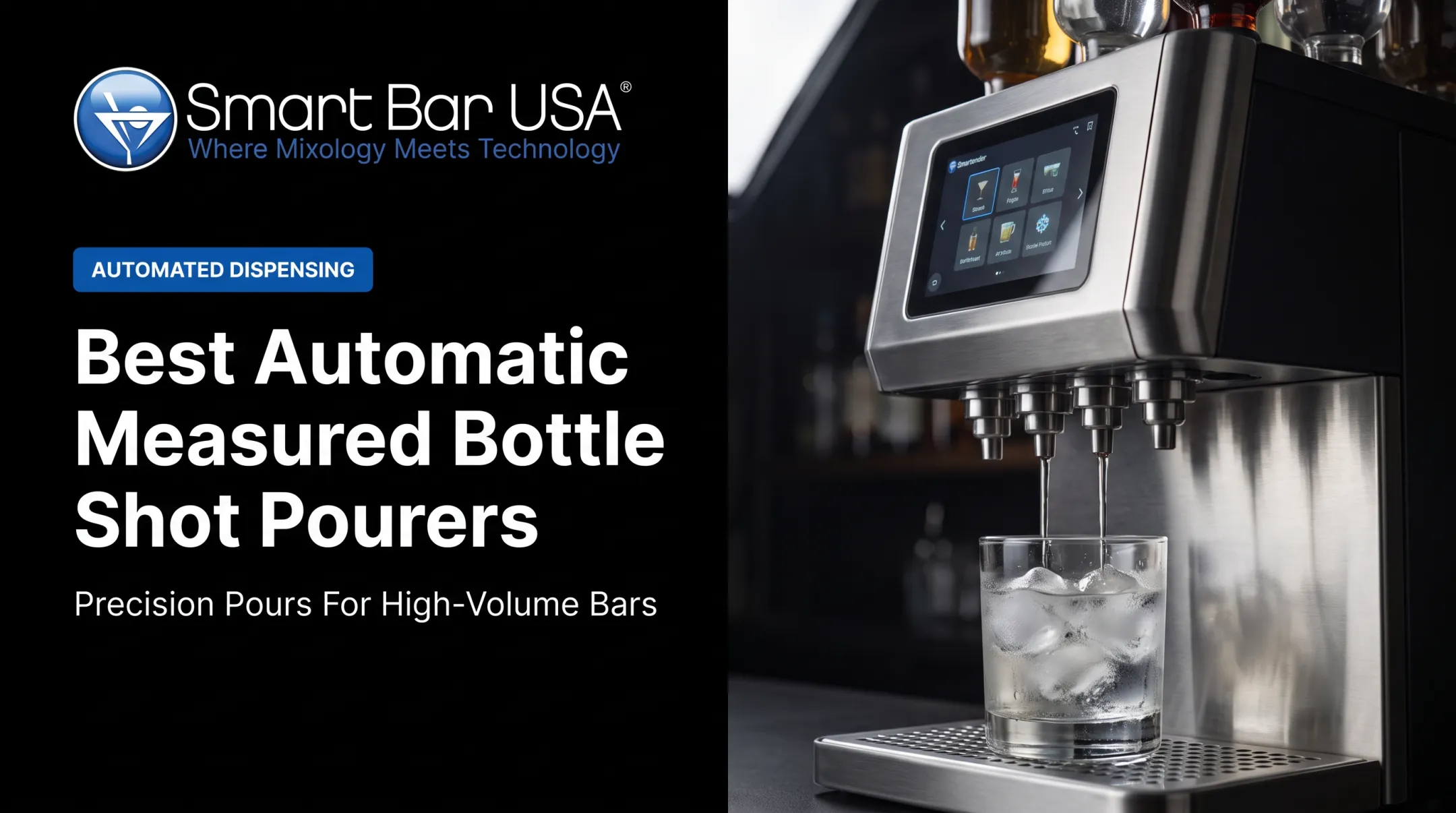
An automated system connects liquor bottles, internal pumps or valves, programmed recipes, and dispensing nozzles, sometimes tied directly into POS order data. Instead of relying on a bartender's hand, the system delivers the same recipe the same way, every time.
Some systems measure individual spirits only. Others handle complete recipes, pouring liquor and mixer together in one motion. Smartender systems, for example, are built to pour multiple ingredients simultaneously rather than layering spirit and mixer as separate steps.
Operational Benefits for High-Volume Venues
Automated measurement translates into faster service and fewer over-pours. It can also let non-bartender staff run the equipment where local regulations allow it.
What operators gain from pour tracking:
- Real-time visibility into what's being poured versus what's being sold
- Faster identification of recipe deviations across shifts
- Reduced dependence on individual bartender habits
- Data to flag unauthorized drinks or unusual shrinkage patterns
At Atomic Golf, four Smartender systems reportedly enabled throughput of up to 1,440 drinks per hour. That nearly tripled the venue's previous beverage capacity during peak windows and created room for roughly 1,920 additional drinks across a two-hour period.

Gains like that matter when a venue's revenue window is fixed, whether on a stadium concourse during halftime or at a golf entertainment venue on a Friday night.
Integration and Deployment Considerations
Before installing any automated system, map out the practical requirements:
- Confirm POS compatibility: check whether the system supports touch-to-pour dispensing through its own interface or your existing POS
- Assess power and network needs: many units require standard electrical service plus wireless or LAN connectivity for remote management
- Plan for drainage: dispensing systems typically need a dedicated drain connection
- Check bottle storage space: capacity ranges from 8 to 50 distinct liquors depending on the model
- Review refrigeration needs: chilled dispensing units need cold-storage compatibility for perishable mixers
QSR Automations announced a ConnectSmart integration with Smartender in 2023, aimed at faster, more accurate restaurant cocktail fulfillment — a sign that POS integration is becoming a standard expectation, not a premium add-on.
Smart Bar USA Example
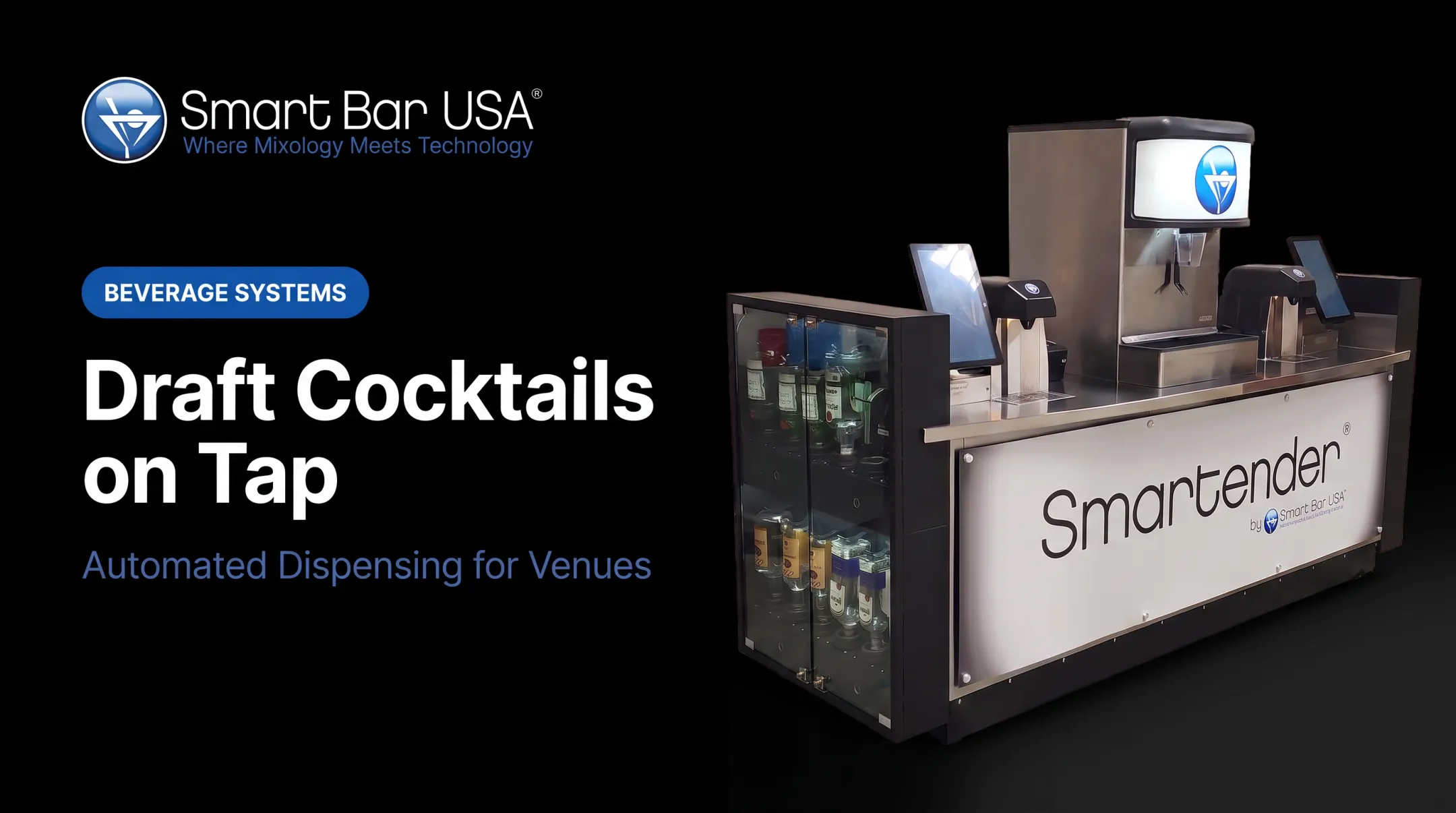
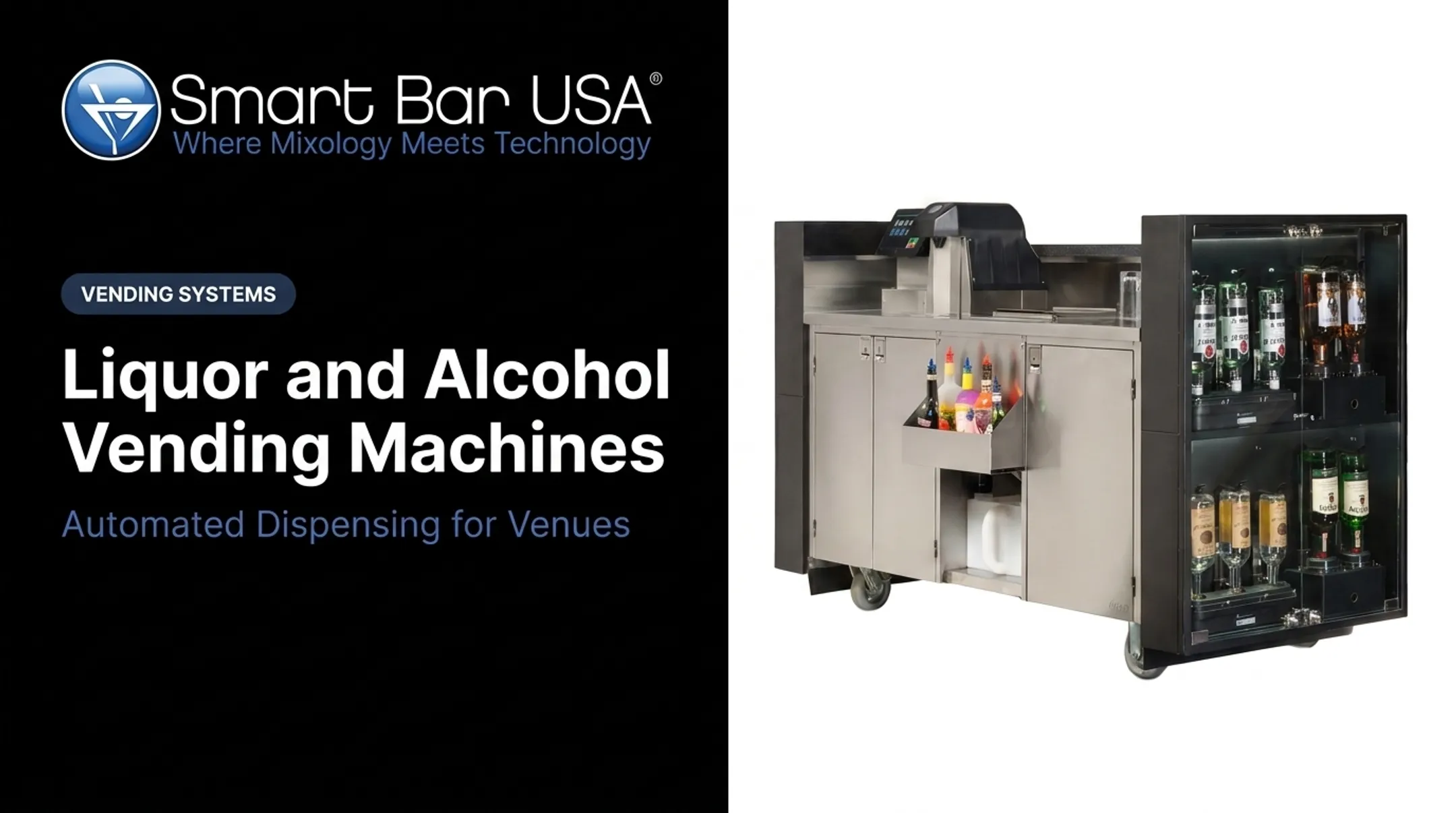
Smart Bar USA, based in Las Vegas, manufactures the Smartender family of automated cocktail dispensers built for hospitality, gaming, travel, and entertainment venues. The lineup spans several configurations:
- Smartender A-Series (A800, A1800, A3400, A5000): modular countertop units holding 8 to 50 liquors for staff-operated bars
- Smartender GO: a fully self-contained portable bar for pop-ups and events
- Smartender CHILL: refrigerated dispensing for chilled spirits and mixers, listed at over 300 drinks per hour
- Smartender Self Serve DUO: a portable twin-head unit for guest self-service via QR ordering
The company promotes an average pour time under 4 seconds and dispensing accuracy to within 1/16 ounce, with ETL Electrical and Sanitation certification on its A-Series specifications. Resorts World Las Vegas selected Smartender for its 88-acre property in 2020, specifying delivery of four liquors and one mixer in under five seconds. These figures come from the manufacturer's own product documentation, so confirm current specs directly before purchasing.

Limitations and Ongoing Responsibilities
Automation doesn't remove the human side of running a bar. Recipe governance, responsible alcohol service, cleaning schedules, and staff training still matter after installation.
Manual tools can still make sense for:
- Highly customized cocktails that change frequently
- Low-volume bars where equipment cost isn't justified
- Service styles built around visible bartender craft
- Menus with frequent ingredient swaps
How to Choose the Right Liquor Measuring Setup
Match the System to the Venue and Service Pattern
Start by looking honestly at your own numbers: average and peak drink volume, number of service stations, menu complexity, and available staff. A small craft cocktail bar has different needs than a casino floor or stadium concession stand.
- Small cocktail bars — jiggers plus documented recipe standards
- Casino floors and stadiums — automated dispensing for consistent, high-speed service
- Multi-location restaurant chains — systems that enforce identical recipes across every unit
- Event venues — portable, self-contained units that move with the crowd
Evaluate Accuracy, Control, and Integration
Before signing a purchase agreement, confirm these details with the manufacturer directly:
- Measurement increments and calibration process
- Recipe locking and user permission controls
- POS compatibility and remote monitoring capability
- Installation requirements, warranty terms, and replacement part availability
- Cleaning procedures and certifications (NSF, ETL, or equivalent)
Estimate Operational Value Before Investing
Industry benchmarks from Bar-i put basic liquor dispensing setups around $8,000, with costs climbing quickly once you add modifier buttons and specialty recipes. Compare that upfront cost against expected effects on labor allocation, waste, and throughput during your busiest windows — not a vendor's best-case percentage.
Run a controlled pilot using your actual menu and peak-period demand before expanding to additional stations. Track remakes, queue times, and actual ounces dispensed against theoretical usage. That data tells you more than any brochure will.
Frequently Asked Questions
Is a jigger 1 oz or 2 oz?
Jiggers come in multiple sizes. A common US double-sided jigger has a 1.5 oz side and a 0.75 oz side, while Japanese-style jiggers often run 2 oz and 1 oz. Always check the markings rather than assuming a standard size.
What is a good liquor measuring device?
Match the tool to your volume and consistency needs. Jiggers suit craft, low-to-mid volume service; measured pourers handle simple recipes consistently; automated dispensers fit high-volume venues that need speed and inventory control.
What is the alcohol measuring device called?
Common terms include jigger, shot measure, measured pourer, liquor dispenser, and automated cocktail dispensing system. Each refers to a different level of manual effort versus automation.