
"Alcohol vending machine" isn't one product. It can mean a refrigerated cabinet releasing sealed cans, a token-controlled cabinet inside a staffed venue, or an automated cocktail dispenser that pours a measured drink into a cup. Each has different hardware, controls, and legal considerations.
This article covers how these systems work, what makes a deployment legal, which products fit which equipment, how to model profitability, and where human oversight still matters.
Key Takeaways
- Automated dispensing does not replace your alcohol license, age-verification duties, or compliance obligations
- The right system depends on venue traffic, product format, staffing, and local regulations
- Packaged RTDs suit simple vending; automated dispensers handle spirits and made-to-order cocktails to recipe
- Model your total operating costs and confirm state/local rules before you buy
What Are Liquor and Alcohol Vending Machines?
Liquor and alcohol vending machines are automated systems that release an alcoholic product after payment and an approved access or age-verification step. The category spans simple packaged-product cabinets to sophisticated cocktail-dispensing systems.
How the Customer Transaction Works
A typical flow looks like this:
- Selection — customer picks a product or drink on a screen or menu
- Payment — card, mobile wallet, or house account
- Access verification — ID scan, staff-issued token, remote attendant approval, or a pre-authorized order
- Approval — system confirms the transaction meets service rules
- Dispensing — product releases or drink pours
- Recording — transaction logs for inventory and compliance review

No single verification method is universally compliant. Some systems use barcode or document scanning; others rely on camera-based identity matching, staff-issued credentials, or a remote attendant reviewing the transaction. Which one works depends entirely on your jurisdiction and license type.
Different Types of Alcohol Automation
- Packaged-product vending machines — release a sealed can, bottle, or ready-to-drink package
- Refrigerated self-service cabinets — similar concept, built for chilled inventory
- Token-controlled machines inside staffed venues — an attendant or cashier controls access, then the machine dispenses
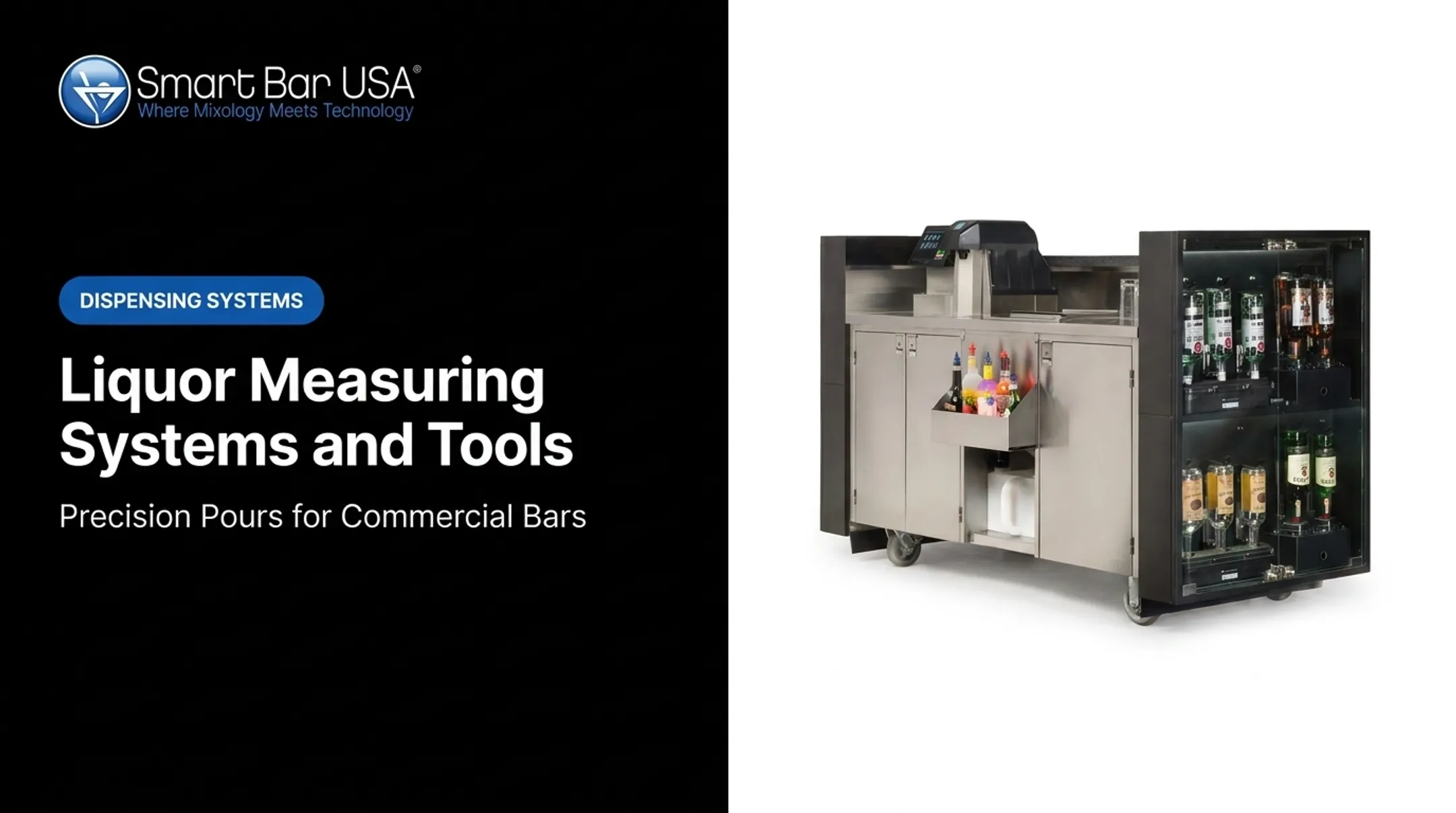
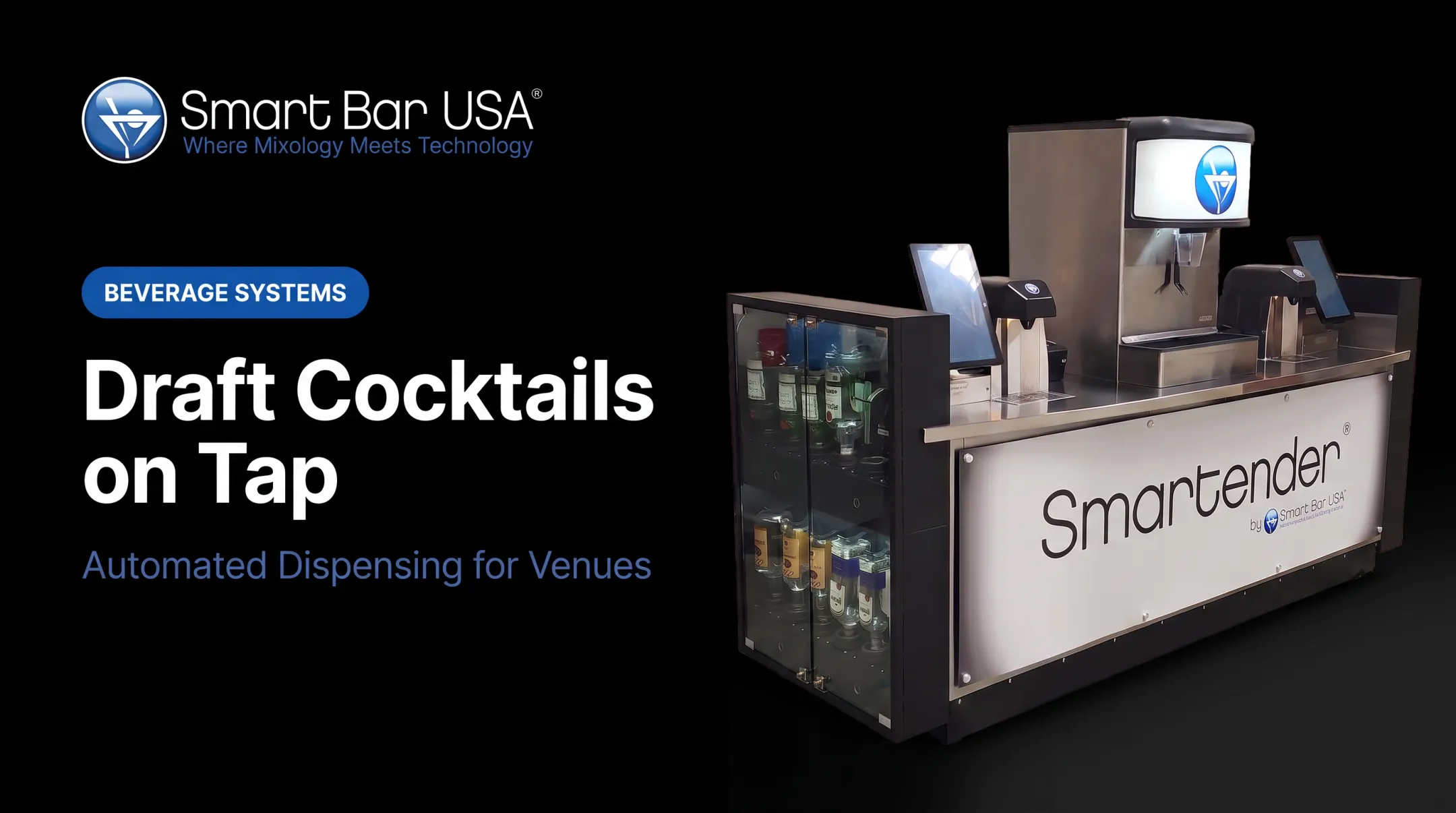
- Automated cocktail dispensers — pour a controlled recipe (spirit plus mixer) into a cup at the point of service
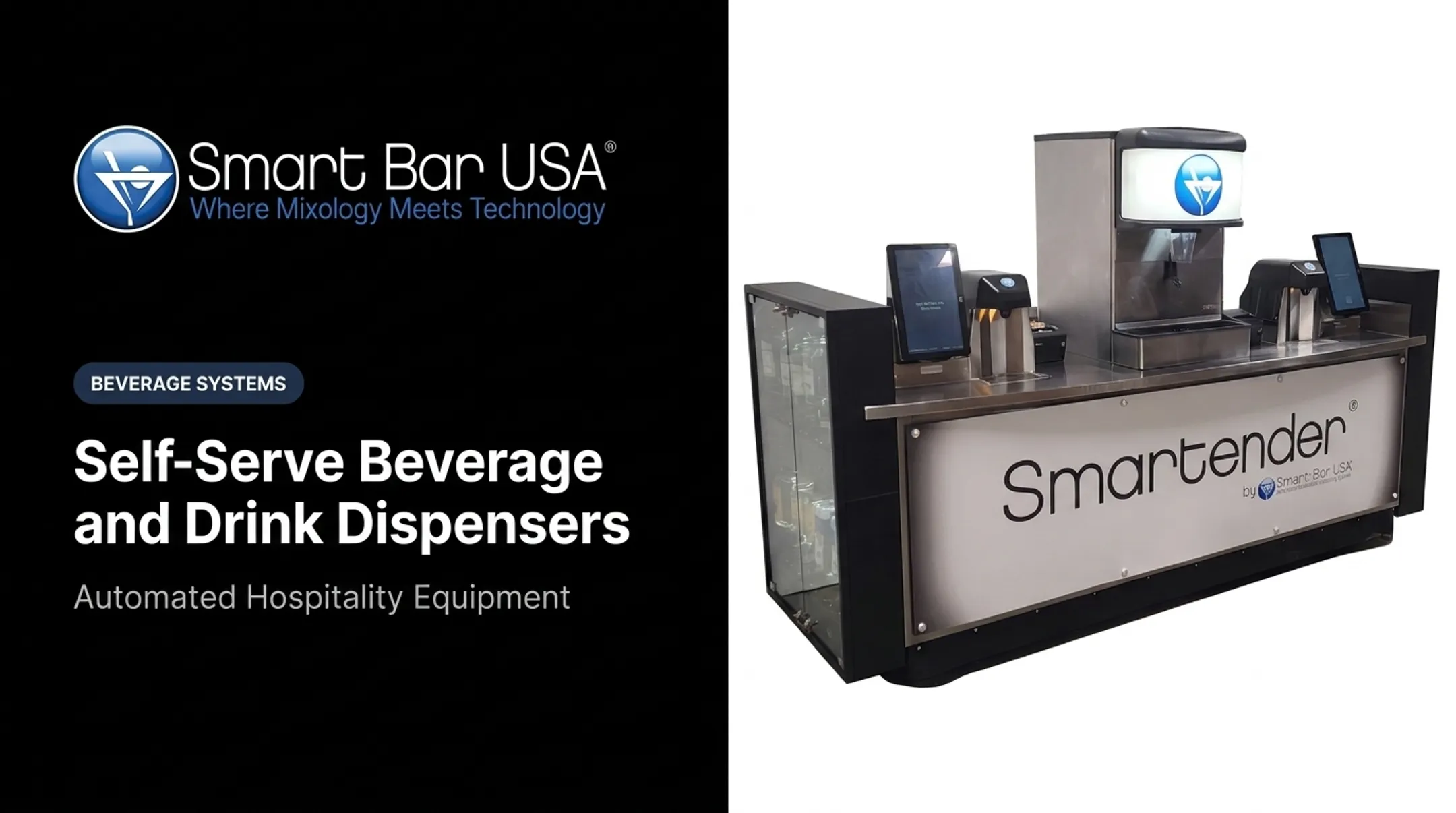
Smart Bar USA's Smartender systems fall into the last category. Rather than releasing a sealed package, they simultaneously pour liquor and mixer, with pour times under 4 seconds per drink and accuracy to 1/16 ounce.

Are Liquor and Alcohol Vending Machines Legal in the US?
There's no single national answer here. Legality depends on your state, county, municipality, alcohol-control authority, license type, and whether the product is consumed on-site or off-site.
Some concrete examples:
- New York: The SLA's 2013 ruling under Rule 92.1 allows automated dispensing on-premises when original containers are used, brands aren't mixed, and minor/intoxication safeguards are in place.
- Texas: The TABC requires covered off-premises sellers to visually inspect and scan buyer ID—or enter ID data into an electronic reader—even during outages.
- California, Pennsylvania, Nevada: No explicit statutory authorization appears in current official texts—not a ban, but you still need direct confirmation from the state ABC board.
Licensing and Premises Requirements
Requirements vary by venue type:
- On-premises (bars, restaurants): machine must tie to an existing license, not run as a standalone unlicensed unit
- Casinos, hotels, stadiums, airports: premises-specific rules apply (e.g., Pennsylvania casinos may sell 24 hours, but only while the facility is open)
- Operator subleases (e.g., California): the licensee must retain full control over alcohol sales and compliance
Age Verification, Supervision, and Intoxication Controls
ID scanning, document authentication, and face matching can confirm age. None of them confirm sobriety. Build a plan for:
- What happens when an ID won't scan
- How staff respond when a customer fails verification
- What the system does if a minor attempts access
- How suspicious transactions get flagged and stopped
Smart Bar USA's Self Serve configuration, for example, uses pre-authorized orders and a customizable alcohol-service schedule that allows or denies access by date and time. Patron eligibility still stays the establishment's responsibility, not the machine's.
Operating Rules and Risk Management
Expect additional restrictions around hours of sale, sealed-package requirements, drink limits, staffing minimums, surveillance, signage, and shutdown procedures. Consult your state and local alcohol authority and legal counsel before installing any system. An equipment vendor can describe what the machine does — it can't approve your site's legal use.
What Drinks and Products Work Best?
Choose products based on operational fit, not just popularity. Consider package size, refrigeration needs, breakage risk, shelf life, and how the format matches your dispense hardware.
Packaged Alcohol Formats
- Cans: durable, easy to refrigerate, low breakage risk
- Mini bottles: compact, but glass raises breakage concerns
- Wine portions: work in single-serve formats; need cold storage
- Sealed ready-to-drink cocktails: increasingly common in vending deployments
Vending Times reported that a 2024 stadium deployment at Progressive Field sold beer and pre-packaged cocktails with automated age verification — proof packaged formats hold up in high-volume, unattended settings.

Cocktails and Mixed Drinks
A sealed premixed cocktail is still a packaged product. A drink built at the point of service combines spirits and mixers on demand, and that is a different operation entirely.
The second category needs more infrastructure:
- Recipe consistency and locked builds
- Chilled ingredient storage
- Cup handling and garnish steps
- Cleaning and maintenance schedules
- Staff availability for exceptions
At Bad to the Bones, a Smartender customer, staff followed on-screen build instructions for glassware and garnish while liquor dispensing stayed automated. They tested a few recipe variations, then locked them in for consistency. That workflow is a useful model for any venue building a cocktail menu around automation.
Selecting a Venue-Specific Menu
Build your menu around:
- Audience and typical spend
- Service window length (a two-hour concert intermission vs. an all-day casino floor)
- Storage capacity and refrigeration limits
- Local licensing conditions
Nonalcoholic options can round out the menu when the venue model supports them. Keep equipment and controls centered on compliant alcohol service first.
Benefits and Challenges of Alcohol Vending Machines
Automation cuts ordering friction and speeds service during rushes, freeing staff for hospitality instead of repetitive pouring. The gains are real — and so are the limits operators need to plan for.
Operational Benefits
- Average pour time around 4 seconds per drink on Smartender systems
- Pours accurate to 1/16 ounce, which cuts recipe variation
- Pour tracking that flags low or empty bottles automatically
- Ounce-level tracking that limits over-pours and unauthorized drinks
Playland Skate Center, a Smart Bar customer, reported consistent pours with no over- or mis-pours after nearly a year of use.
Customer and Venue Experience
Self-service and automated dispensing create a novel, interactive experience in hotel lobbies, casino floors, stadium concourses, and festivals. Guests still hit friction points:
- ID checks that slow the first pour
- Failed or declined payments mid-order
- Unclear on-screen prompts that stall first-time users
- Fewer customization options than a full bar
- Guests who prefer a human bartender
Challenges and Limitations
Machines require footprint, refrigeration, connectivity, and regular cleaning. Glass breakage, vandalism, payment disputes, and downtime are real operational risks.
A machine can verify age; it cannot assess intoxication or settle a complex service dispute. Trained staff, security, or a remote attendant still belong in the workflow.
When Automation Complements Rather Than Replaces Bartenders
Smart Bar USA systems fit overflow service, satellite bars, and time-sensitive events. Skilled staff stay on hospitality and complex orders while automation handles repetitive high-volume pouring.
Before expanding, test the system during a real peak period and track:
- Service speed
- Failed transactions
- Staff interventions required
- Customer satisfaction
- Waste and inventory accuracy
How to Evaluate Profitability and Choose the Right System
Build a venue-specific model rather than relying on industry averages. The National Restaurant Association reports full-service labor costs at a median 36.5% of sales in 2024, giving you a benchmark for what automation might offset. Your own numbers will vary.
Build a Realistic Revenue and Cost Model
Factor in:
- Projected transactions per hour and average selling price
- Product/pour cost per drink
- Labor redeployment (not necessarily elimination)
- Payment processing fees
- Maintenance, connectivity, and insurance
- Equipment cost and depreciation
Run the numbers for high-demand, average-demand, and low-demand scenarios. A festival weekend and a slow Tuesday night look very different on paper.
Match the System to the Venue
| Venue Type | Priority | Configuration Fit |
|---|---|---|
| Stadium/festival | Speed, mobility | Portable (Smartender GO) |
| Hotel/casino | Integration, reporting | Modular, multi-unit |
| Restaurant chain | Consistency across locations | Modular with cloud software |
| Airport lounge | Compact footprint, POS tie-in | Modular or Self Serve |

Evaluate Technology and Vendor Support
Buyer checklist:
- Age-verification compatibility
- Payment processing and POS integration
- Inventory and pour reporting
- Remote monitoring
- Refrigeration and cleaning requirements
- Warranty, installation, and training support
- Replacement parts availability
Check certifications carefully. ETL and NSF marks indicate specific safety and sanitation testing. Confirm what each mark covers for the model you are evaluating; neither replaces local regulatory approval.
Smart Bar USA as an Automated Cocktail Dispensing Option
Smart Bar USA manufactures the Smartender family of automated cocktail dispensers in Las Vegas, distinct from a packaged-liquor vending cabinet. Configurations include:
- Smartender A-Series (A800, A1800, A3400, A5000) — modular countertop units holding 8 to 50 distinct liquors
- Smartender GO — portable, fully self-contained bar for events and overflow service
- Smartender CHILL — refrigerated dispensing for perishable mixers
- Smartender DUO / Self Serve — self-service configurations using pre-authorized orders and scheduled access controls

Smartender systems are specified to pour in under 4 seconds with 1/16-ounce accuracy, plus POS integration and remote pour-tracking through Smartender Ops Service. Request a venue-specific evaluation to see how those specs apply to your traffic and layout.
Plan the Launch and Measure Results
- Confirm legal eligibility with your state/local alcohol authority
- Select a controlled location for a pilot
- Define staff responsibilities for exceptions and oversight
- Configure a limited menu to start
- Test verification and payment flows under real conditions
- Train employees on override and refund procedures
After launch, track:
- Transactions by hour and average ticket
- Failed verifications and dispense errors
- Staff interventions and inventory variance
Review those metrics before expanding to additional units.
Frequently Asked Questions
Is it legal to put alcohol in a vending machine?
Legality varies by US state and locality, depending on licensing, premises type, age verification, and hours of sale. Confirm requirements with your state alcohol authority and legal counsel before installing any system.
Are drink vending machines profitable?
Profitability depends on demand, pricing, product margins, labor savings, and equipment costs at your specific venue. Build a site-specific financial model and run a pilot before committing to a full rollout.
Are there vending machines for alcohol?
Yes. Commercial systems exist for packaged beer, wine, spirits, ready-to-drink cocktails, and automated cocktail dispensing. Available configurations and legal deployment options vary by state and venue type.
What are some good drinks to put in a vending machine?
Cans, mini bottles, wine portions, and ready-to-drink cocktails generally suit vending formats best due to storage and dispense compatibility. Menu selection should still reflect local demand and regulatory limits.
How does an alcohol vending machine verify a customer's age?
Methods include government-ID scanning, document authentication, face matching, staff-issued access credentials, or remote attendant approval. Your chosen method must meet state and local requirements before deployment.
What's the difference between an alcohol vending machine and an automated cocktail dispenser?
A vending machine typically releases a packaged product like a can or bottle. An automated cocktail dispenser, such as Smart Bar USA’s Smartender, combines measured spirits and mixers into a freshly poured drink. Both still require proper controls, cleaning, and legal review.